
Adding Dilanubicel to Single-Unit Cord-Blood Transplantation Has Favorable Safety Profile
 via HealthDay
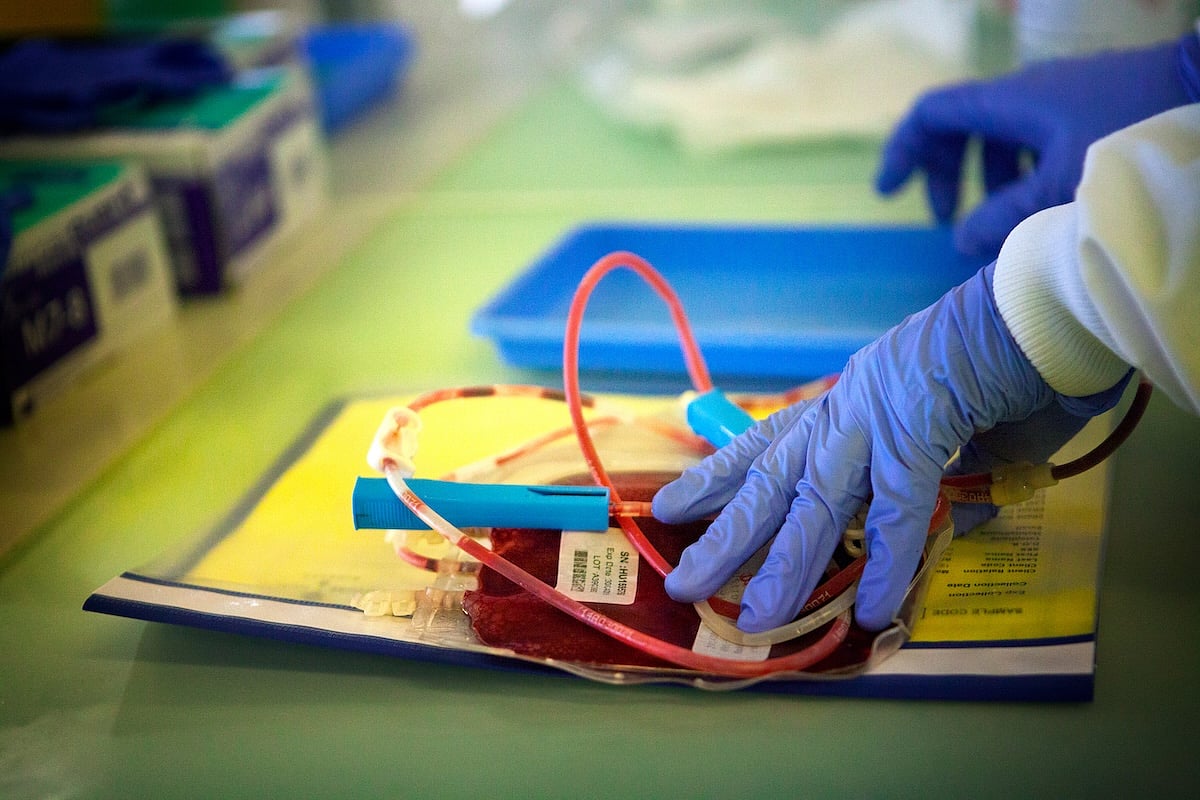
FRIDAY, May 1, 2026 -- Adding dilanubicel, a cryopreserved, cord blood (CB)-derived, non-human leukocyte antigen-matched expanded progenitor cell product generated from pooled donors, to single-unit cord-blood transplantation (CBT) has a favorable safety profile and excellent clinical outcomes, according to a study published online April 27 in the Journal of Clinical Oncology.
Filippo Milano, M.D., Ph.D., from the Fred Hutchinson Cancer Center in Seattle, and colleagues examined the safety of adding dilanubicel to single-unit CBT in a phase 2 study involving 28 patients with hematological malignancies. A matched single cord blood-unit infusion was followed by a target dose of 800 × 10⁶ CD34⁺ cells of dilanubicel. All patients received a myeloablative conditioning regimen and graft-versus-host disease (GVHD) prophylaxis.
The researchers found that dilanubicel induced transient myelomonocytic recovery, which peaked on day 7 and was absent by day 14. By day 9, an early lymphocyte expansion occurred, derived exclusively from the CB graft, which peaked by day 11. There was no grade 3 to 4 acute or chronic GVHD. Twenty-seven patients remained alive and disease-free at a median follow-up of 1.4 years. Patients treated with dilanubicel demonstrated faster hematopoietic recovery and had a markedly lower incidence of severe acute GVHD compared with a contemporaneous institutional cohort receiving standard single- or double-unit CBT.
"The cells from the pooled donor stem cell product did not remain long term, but they all helped the matched cord blood donor establish a new, healthy immune system in the patient," Milano said in a statement.
Abstract/Full Text (subscription or payment may be required)
Disclaimer: Statistical data in medical articles provide general trends and do not pertain to individuals. Individual factors can vary greatly. Always seek personalized medical advice for individual healthcare decisions.
Source: HealthDay
Posted : 2026-05-02 02:06
Read more

Disclaimer
Every effort has been made to ensure that the information provided by Drugslib.com is accurate, up-to-date, and complete, but no guarantee is made to that effect. Drug information contained herein may be time sensitive. Drugslib.com information has been compiled for use by healthcare practitioners and consumers in the United States and therefore Drugslib.com does not warrant that uses outside of the United States are appropriate, unless specifically indicated otherwise. Drugslib.com's drug information does not endorse drugs, diagnose patients or recommend therapy. Drugslib.com's drug information is an informational resource designed to assist licensed healthcare practitioners in caring for their patients and/or to serve consumers viewing this service as a supplement to, and not a substitute for, the expertise, skill, knowledge and judgment of healthcare practitioners.
The absence of a warning for a given drug or drug combination in no way should be construed to indicate that the drug or drug combination is safe, effective or appropriate for any given patient. Drugslib.com does not assume any responsibility for any aspect of healthcare administered with the aid of information Drugslib.com provides. The information contained herein is not intended to cover all possible uses, directions, precautions, warnings, drug interactions, allergic reactions, or adverse effects. If you have questions about the drugs you are taking, check with your doctor, nurse or pharmacist.
Popular Keywords
- metformin obat apa
- alahan panjang
- glimepiride obat apa
- takikardia adalah
- erau ernie
- pradiabetes
- besar88
- atrofi adalah
- kutu anjing
- trakeostomi
- mayzent pi
- enbrel auto injector not working
- enbrel interactions
- lenvima life expectancy
- leqvio pi
- what is lenvima
- lenvima pi
- empagliflozin-linagliptin
- encourage foundation for enbrel
- qulipta drug interactions