
AHA: High Blood Pressure in Young Adulthood Tied to Higher Risk for Cardiovascular Events in Midlife

Medically reviewed by Drugs.com
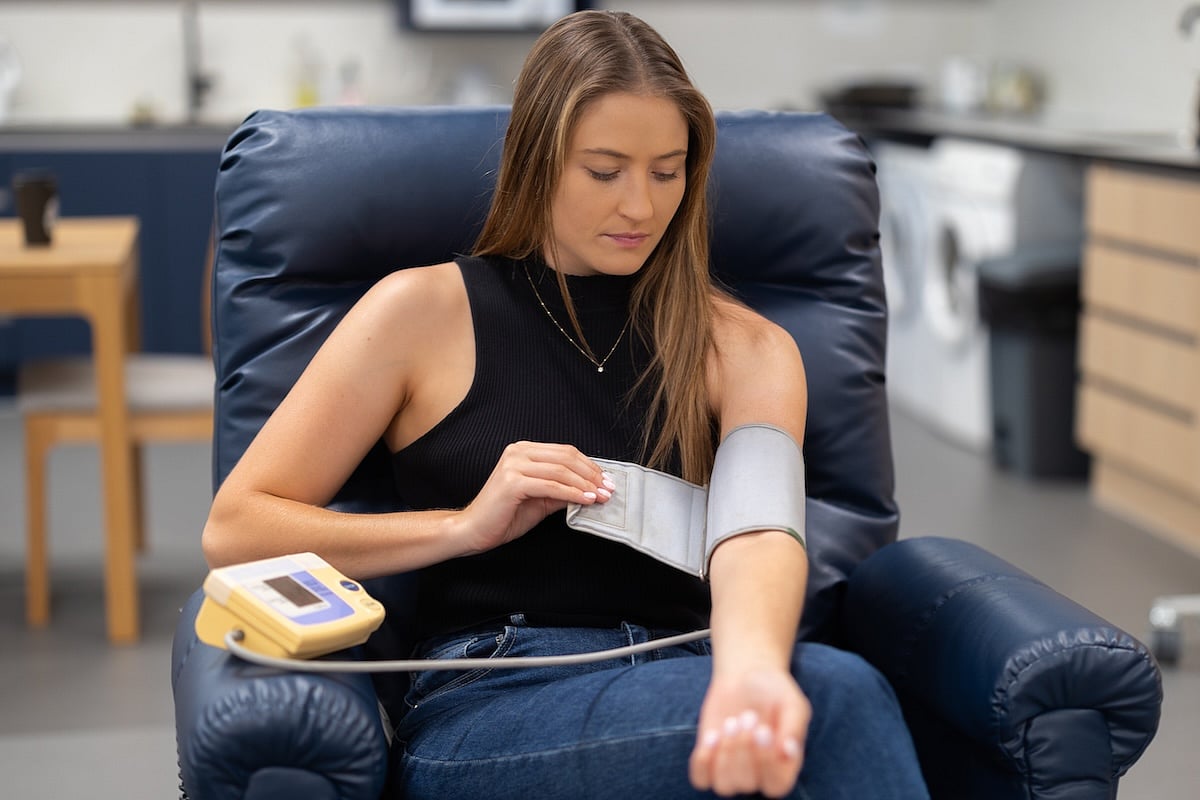 via HealthDay
TUESDAY, March 24, 2026 -- Higher cumulative blood pressure (BP) in young adulthood is associated with increased risks for cardiovascular disease (CVD) and kidney events in midlife, according to a study presented at the American Heart Association Epidemiology and Prevention/Lifestyle and Cardiometabolic Health 2026 Scientific Sessions, held from March 17 to 20 in Boston.
Dasom Son, from Yonsei University College of Medicine in Seoul, South Korea, and colleagues examined the cumulative impact of early-life elevated BP on premature CVD and kidney outcomes. The analysis included 291,887 adults aged 40 years, without prior CVD or chronic kidney disease, identified from the Korean National Health Insurance Service database, and who had three or more health examination records with BP measurement between ages 30 and 40 years.
The researchers found that during a median follow-up of 10.2 years (after age 40 years), the cumulative incidence and risk for all outcomes increased uniformly for those with higher quintiles of cumulative systolic and diastolic BP from ages 30 to 40 years. For example, each 10-mmHg higher cumulative systolic BP for 10 years was associated with a higher risk for CVD events (hazard ratio [HR], 1.27) and kidney events (HR, 1.22). Similarly, for each 5-mmHg higher cumulative diastolic BP for 10 years, there was also a higher risk for CVD events (HR, 1.20) and kidney events (HR, 1.16). There was a log-linear, dose-dependent pattern for all associations, which were similar by sex and for both composite and subtype events.
"Maintaining optimal blood pressure is a concern for every individual, at every age," coauthor Hokyou Lee, M.D., Ph.D., also from Yonsei University, said in a statement. "Early prevention, diagnosis, monitoring, and treatment, if needed, are investments in future heart and kidney health. Timely treatment of elevated blood pressure is essential to reduce the effects of years of exposure, which underscores the importance of monitoring and managing blood pressure as soon as a patient has elevated blood pressure levels."
Disclaimer: Statistical data in medical articles provide general trends and do not pertain to individuals. Individual factors can vary greatly. Always seek personalized medical advice for individual healthcare decisions.
Source: HealthDay
Posted : 2026-03-25 01:58
Read more

- Aldeyra Therapeutics Receives Complete Response Letter from the U.S. Food and Drug Administration for the Reproxalap New Drug Application for the Treatment of Signs and Symptoms of Dry Eye Disease
- Power Outages May Increase Risk for Hospitalization Among Older U.S. Adults
- Guidance Provided for Transition From Pediatric to Adult Endocrine Care
- FDA Approves Lynavoy (linerixibat) for Cholestatic Pruritus in Patients with Primary Biliary Cholangitis
- Improved Survival But More Adverse Events Seen for Women With Cancer
Disclaimer
Every effort has been made to ensure that the information provided by Drugslib.com is accurate, up-to-date, and complete, but no guarantee is made to that effect. Drug information contained herein may be time sensitive. Drugslib.com information has been compiled for use by healthcare practitioners and consumers in the United States and therefore Drugslib.com does not warrant that uses outside of the United States are appropriate, unless specifically indicated otherwise. Drugslib.com's drug information does not endorse drugs, diagnose patients or recommend therapy. Drugslib.com's drug information is an informational resource designed to assist licensed healthcare practitioners in caring for their patients and/or to serve consumers viewing this service as a supplement to, and not a substitute for, the expertise, skill, knowledge and judgment of healthcare practitioners.
The absence of a warning for a given drug or drug combination in no way should be construed to indicate that the drug or drug combination is safe, effective or appropriate for any given patient. Drugslib.com does not assume any responsibility for any aspect of healthcare administered with the aid of information Drugslib.com provides. The information contained herein is not intended to cover all possible uses, directions, precautions, warnings, drug interactions, allergic reactions, or adverse effects. If you have questions about the drugs you are taking, check with your doctor, nurse or pharmacist.
Popular Keywords
- metformin obat apa
- alahan panjang
- glimepiride obat apa
- takikardia adalah
- erau ernie
- pradiabetes
- besar88
- atrofi adalah
- kutu anjing
- trakeostomi
- mayzent pi
- enbrel auto injector not working
- enbrel interactions
- lenvima life expectancy
- leqvio pi
- what is lenvima
- lenvima pi
- empagliflozin-linagliptin
- encourage foundation for enbrel
- qulipta drug interactions