
American Aid Worker Tests Positive for Ebola After DRC Exposure
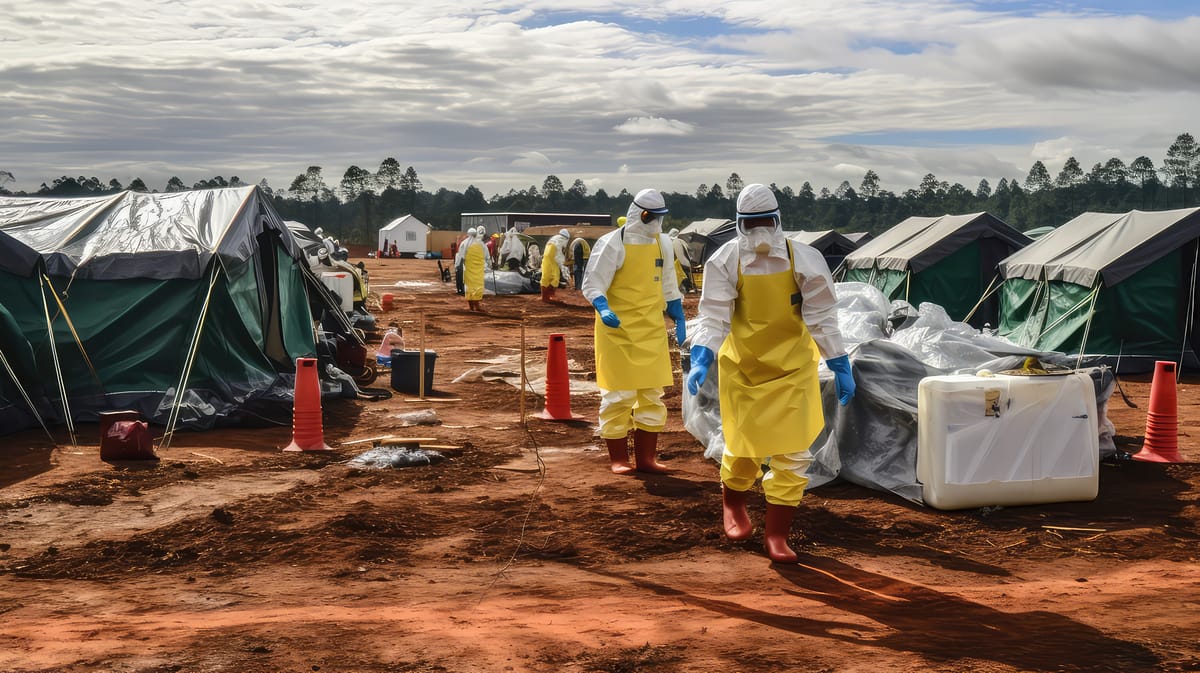 via HealthDay
TUESDAY, May 19, 2026 — An American doctor who was exposed to Ebola while working in the Democratic Republic of the Congo (DRC) has tested positive for the disease, according to the U.S. Centers for Disease Control and Prevention (CDC).
Dr. Peter Stafford, a surgeon working with the Christian missions organization Serge in DRC since 2023, has been safely evacuated and is receiving treatment, the group said in a statement.
Stafford, a board-certified general surgeon with a specialization in burn care, was serving patients in Bunia, in eastern DRC’s Ituri Province – where the Ebola outbreak was recently identified, according to the statement.
Stafford developed symptoms over the weekend and tested positive late Sunday. He was transported Germany for treatment and care along with six other Americans who are high-risk individuals who will be monitored, said Dr. Satish Pillai, the incident manager for CDC's Ebola Response.
Two other physicians — Stafford’s wife, Dr. Rebekah Stafford, and Dr. Patrick LaRochelle — are asymptomatic and are being monitored, noted the statement. The Staffords’ children are also being monitored, according to The Washington Post.
“All three medical professionals have strictly adhered to established quarantine protocols since the potential exposure,” the statement said.
Germany was chosen to receive the group for practical reasons.
Pillai explained that the country has previous experience caring for Ebola patients and travel time from the DRC is shorter, enabling the evacuees to reach points of care quickly.
"We want to thank our German colleagues, the DRC and Ugandan ministries of health involved in facilitating this," Pillai said on a moderated call. "I want to remind you that this remains a highly fluid situation, and we will continue to update you as we learn more."
He added that the CDC, U.S. Department of Homeland Security and other federal agencies have taken proactive public health measures to prevent Ebola from entering the United States. The measures include:
Pillai said there are no approved drugs or vaccines for Bondibugyo, one of the viruses that causes the current strain of Ebola disease.
He said the risk to the United States remains low.
"CDC is actively involved in this response, and we're working across domestic and international partners," he said. "Everything we do is focused on the people affected and the security of Americans here and abroad."
As of May 18, there are reports of 11 confirmed cases and 336 suspected cases, including 88 deaths in DRC, according to the CDC. These numbers are subject to change.
Sources
Disclaimer: Statistical data in medical articles provide general trends and do not pertain to individuals. Individual factors can vary greatly. Always seek personalized medical advice for individual healthcare decisions.
Source: HealthDay
Posted : 2026-05-20 02:48
Read more

Disclaimer
Every effort has been made to ensure that the information provided by Drugslib.com is accurate, up-to-date, and complete, but no guarantee is made to that effect. Drug information contained herein may be time sensitive. Drugslib.com information has been compiled for use by healthcare practitioners and consumers in the United States and therefore Drugslib.com does not warrant that uses outside of the United States are appropriate, unless specifically indicated otherwise. Drugslib.com's drug information does not endorse drugs, diagnose patients or recommend therapy. Drugslib.com's drug information is an informational resource designed to assist licensed healthcare practitioners in caring for their patients and/or to serve consumers viewing this service as a supplement to, and not a substitute for, the expertise, skill, knowledge and judgment of healthcare practitioners.
The absence of a warning for a given drug or drug combination in no way should be construed to indicate that the drug or drug combination is safe, effective or appropriate for any given patient. Drugslib.com does not assume any responsibility for any aspect of healthcare administered with the aid of information Drugslib.com provides. The information contained herein is not intended to cover all possible uses, directions, precautions, warnings, drug interactions, allergic reactions, or adverse effects. If you have questions about the drugs you are taking, check with your doctor, nurse or pharmacist.
Popular Keywords
- metformin obat apa
- alahan panjang
- glimepiride obat apa
- takikardia adalah
- erau ernie
- pradiabetes
- besar88
- atrofi adalah
- kutu anjing
- trakeostomi
- mayzent pi
- enbrel auto injector not working
- enbrel interactions
- lenvima life expectancy
- leqvio pi
- what is lenvima
- lenvima pi
- empagliflozin-linagliptin
- encourage foundation for enbrel
- qulipta drug interactions