
ATS: Early Nonadherence to CPAP Does Not Predict Treatment Abandonment
 via HealthDay
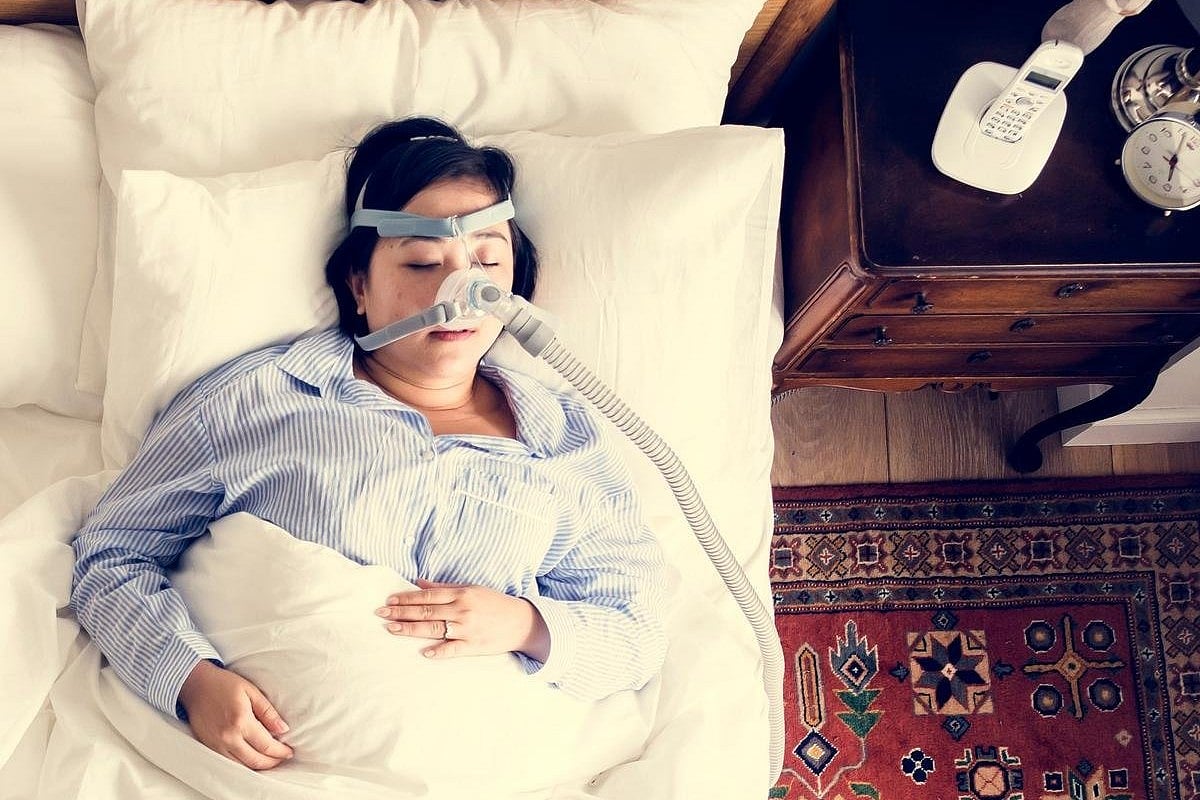
TUESDAY, June 2, 2026 -- For adults with obstructive sleep apnea (OSA), early nonadherence to continuous positive airway pressure (CPAP) does not predict treatment abandonment, according to a study presented at the American Thoracic Society 2026 International Conference, held from May 15 to 20 in Orlando, Florida.
Dennis Hwang, M.D., from Kaiser Permanente Southern California, and colleagues examined long-term use and rates of CPAP treatment abandonment, regardless of early usage levels. All adult patients with OSA dispensed CPAP between 2020 and 2023 within Kaiser Permanente Southern California were analyzed; those with at least one recorded episode of device usage during the one-year period after CPAP dispensation were stratified by 90-day Centers for Medicare & Medicare Services (CMS) adherence status.
Overall, 49.0 percent of the 132,492 patients met 90-day CMS adherence, increasing to 53.5 percent among those aged 65 years or older. The researchers observed associations for younger age, female sex, non-White race/ethnicity, lower socioeconomic status, and less OSA severity with failure to meet CMS adherence. Thirty-six percent of patients not meeting CMS adherence still used CPAP at month 12. Mean use in this group was 197 ± 160 min/night, with at least four hours for 42.9 ± 36.0 percent of nights. Of all patients who were CMS nonadherent, 20.9 and 13.6 percent used CPAP at least two and at least four hours/night, respectively, during month 12; usage was even higher among those aged 65 years or older: 23.3 and 16.5 percent at least two and at least four hours/night, respectively.
"These findings challenge a long-standing assumption in clinical practice and policy," Hwang said in a statement. "The scale of continued use we observed in those that did not initially meet Medicare adherence was striking."
Disclaimer: Statistical data in medical articles provide general trends and do not pertain to individuals. Individual factors can vary greatly. Always seek personalized medical advice for individual healthcare decisions.
Source: HealthDay
Posted : 2026-06-03 10:40
Read more

Disclaimer
Every effort has been made to ensure that the information provided by Drugslib.com is accurate, up-to-date, and complete, but no guarantee is made to that effect. Drug information contained herein may be time sensitive. Drugslib.com information has been compiled for use by healthcare practitioners and consumers in the United States and therefore Drugslib.com does not warrant that uses outside of the United States are appropriate, unless specifically indicated otherwise. Drugslib.com's drug information does not endorse drugs, diagnose patients or recommend therapy. Drugslib.com's drug information is an informational resource designed to assist licensed healthcare practitioners in caring for their patients and/or to serve consumers viewing this service as a supplement to, and not a substitute for, the expertise, skill, knowledge and judgment of healthcare practitioners.
The absence of a warning for a given drug or drug combination in no way should be construed to indicate that the drug or drug combination is safe, effective or appropriate for any given patient. Drugslib.com does not assume any responsibility for any aspect of healthcare administered with the aid of information Drugslib.com provides. The information contained herein is not intended to cover all possible uses, directions, precautions, warnings, drug interactions, allergic reactions, or adverse effects. If you have questions about the drugs you are taking, check with your doctor, nurse or pharmacist.
Popular Keywords
- metformin obat apa
- alahan panjang
- glimepiride obat apa
- takikardia adalah
- erau ernie
- pradiabetes
- besar88
- atrofi adalah
- kutu anjing
- trakeostomi
- mayzent pi
- enbrel auto injector not working
- enbrel interactions
- lenvima life expectancy
- leqvio pi
- what is lenvima
- lenvima pi
- empagliflozin-linagliptin
- encourage foundation for enbrel
- qulipta drug interactions