
Blood Glucose Monitors Improve Control Among Type 2 Diabetes Patients
 via HealthDay
MONDAY, April 27, 2026 — Type 2 diabetes patients who wear a continuous glucose monitor have better blood sugar control than those who rely on traditional finger-prick testing, a new study says.
People equipped with a continuous glucose monitor (CGM) had greater reductions in hemoglobin A1c (HbA1c) levels, a marker of lower blood sugar, researchers reported April 23 in The Lancet Diabetes and Endocrinology.
“Diabetes is extremely challenging to manage,” lead researcher Emma Wilmot, a clinical associate professor at the University of Nottingham in the U.K., said in a news release. “Individuals I supported during the trial told me that the use of CGM gave them new insights into their diabetes management, with many describing it as ‘life changing.’ ”
It’s incredibly important for people with diabetes to keep close tabs on their blood sugar, both to avoid an episode of hypoglycemia and to reduce the risk of long-term complications like blindness, amputations, heart disease and premature death.
Until recently, diabetics have relied on finger prick blood tests to track their blood sugar levels, administering insulin as needed to keep their levels managed.
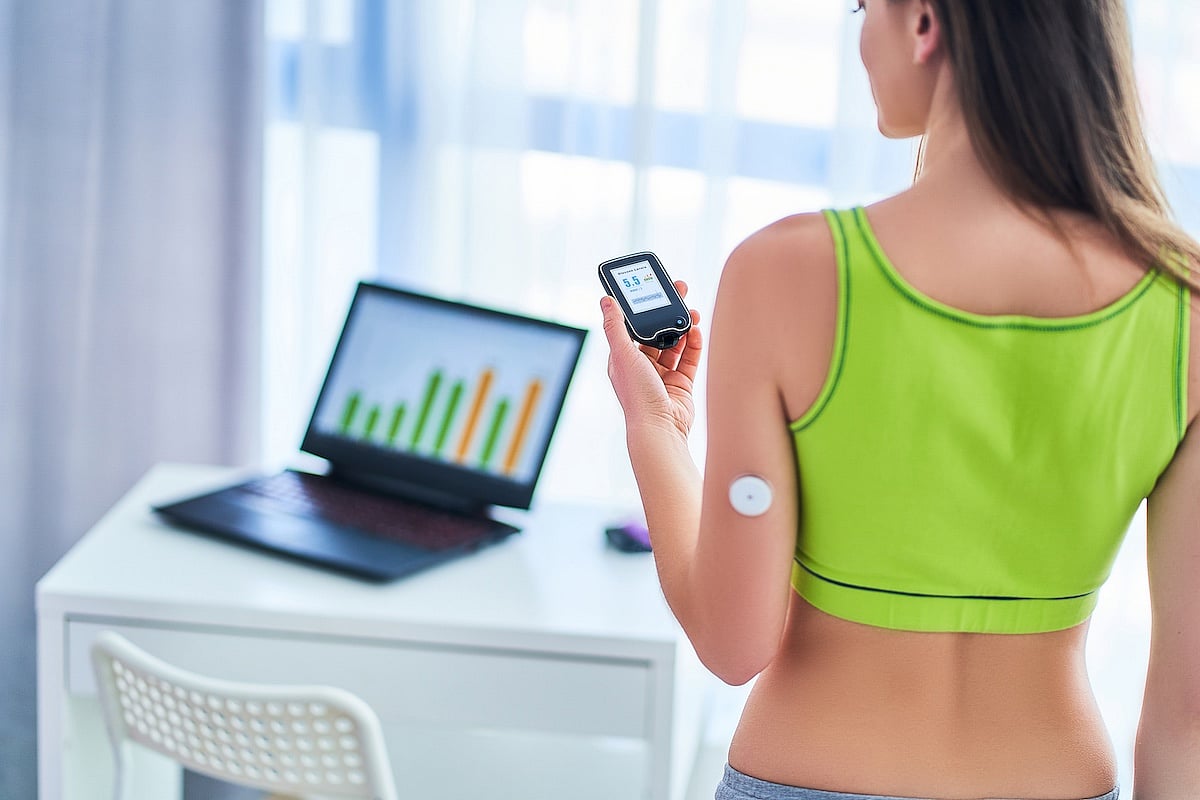
Continuous glucose monitoring involves a sensor placed on the back of a person’s arm that constantly measures blood sugar levels. A transmitter sends results to either a wearable device or a smartphone, allowing patients instant access to any changes in their levels and warning them of dangerous fluctuations.
CGM has become a standard of care for people with genetically driven type 1 diabetes, but has not been widely adopted by people with type 2 diabetes, researchers said in background notes.
For this new trial, more than 300 type 2 diabetes patients were randomly assigned to either CGM or continued finger-prick testing. The participants were left on their own for 16 weeks, and then supported by a doctor who could prescribe new treatments for another 16 weeks.
At both 16 and 32 weeks, people using CGM had lower HbA1c levels than those relying on finger-prick testing, the study found.
“This study had two distinct phases,” said senior researcher Dr. Lala Leelarathna, a clinical associate professor at Imperial College London.
“In the first phase, participants saw significant improvements in glucose levels without introducing new medications or insulin, indicating that people were able to use the information gleaned from the glucose sensors to make meaningful changes,” Leelarathna said in a news release. “In the second phase, where new therapies were introduced, we observed further improvements in glucose management.”
Lucy Chambers, head of research impact communications at Diabetes UK, hailed the study.
“For many people with type 2 diabetes, managing their condition means constantly balancing blood sugar levels with medications alongside everyday activities such as eating, sleeping and exercising,” Chambers said. “Continuous glucose monitoring gives people a near real‑time picture of their blood sugar levels, which can be transformative, reducing the need for endless finger-prick tests and supporting safe, effective day‑to‑day management.”
The upshot?
“This important study strengthens the case for expanding the use of CGM for some people with type 2 diabetes," Chambers addd, "Though analysis is needed to confirm whether it would be cost-effective.”
Sources
Disclaimer: Statistical data in medical articles provide general trends and do not pertain to individuals. Individual factors can vary greatly. Always seek personalized medical advice for individual healthcare decisions.
Source: HealthDay
Posted : 2026-04-28 02:13
Read more

Disclaimer
Every effort has been made to ensure that the information provided by Drugslib.com is accurate, up-to-date, and complete, but no guarantee is made to that effect. Drug information contained herein may be time sensitive. Drugslib.com information has been compiled for use by healthcare practitioners and consumers in the United States and therefore Drugslib.com does not warrant that uses outside of the United States are appropriate, unless specifically indicated otherwise. Drugslib.com's drug information does not endorse drugs, diagnose patients or recommend therapy. Drugslib.com's drug information is an informational resource designed to assist licensed healthcare practitioners in caring for their patients and/or to serve consumers viewing this service as a supplement to, and not a substitute for, the expertise, skill, knowledge and judgment of healthcare practitioners.
The absence of a warning for a given drug or drug combination in no way should be construed to indicate that the drug or drug combination is safe, effective or appropriate for any given patient. Drugslib.com does not assume any responsibility for any aspect of healthcare administered with the aid of information Drugslib.com provides. The information contained herein is not intended to cover all possible uses, directions, precautions, warnings, drug interactions, allergic reactions, or adverse effects. If you have questions about the drugs you are taking, check with your doctor, nurse or pharmacist.
Popular Keywords
- metformin obat apa
- alahan panjang
- glimepiride obat apa
- takikardia adalah
- erau ernie
- pradiabetes
- besar88
- atrofi adalah
- kutu anjing
- trakeostomi
- mayzent pi
- enbrel auto injector not working
- enbrel interactions
- lenvima life expectancy
- leqvio pi
- what is lenvima
- lenvima pi
- empagliflozin-linagliptin
- encourage foundation for enbrel
- qulipta drug interactions