
Combo Heat Waves/Droughts Will Affect Billions A Year By 2100, Researchers Project
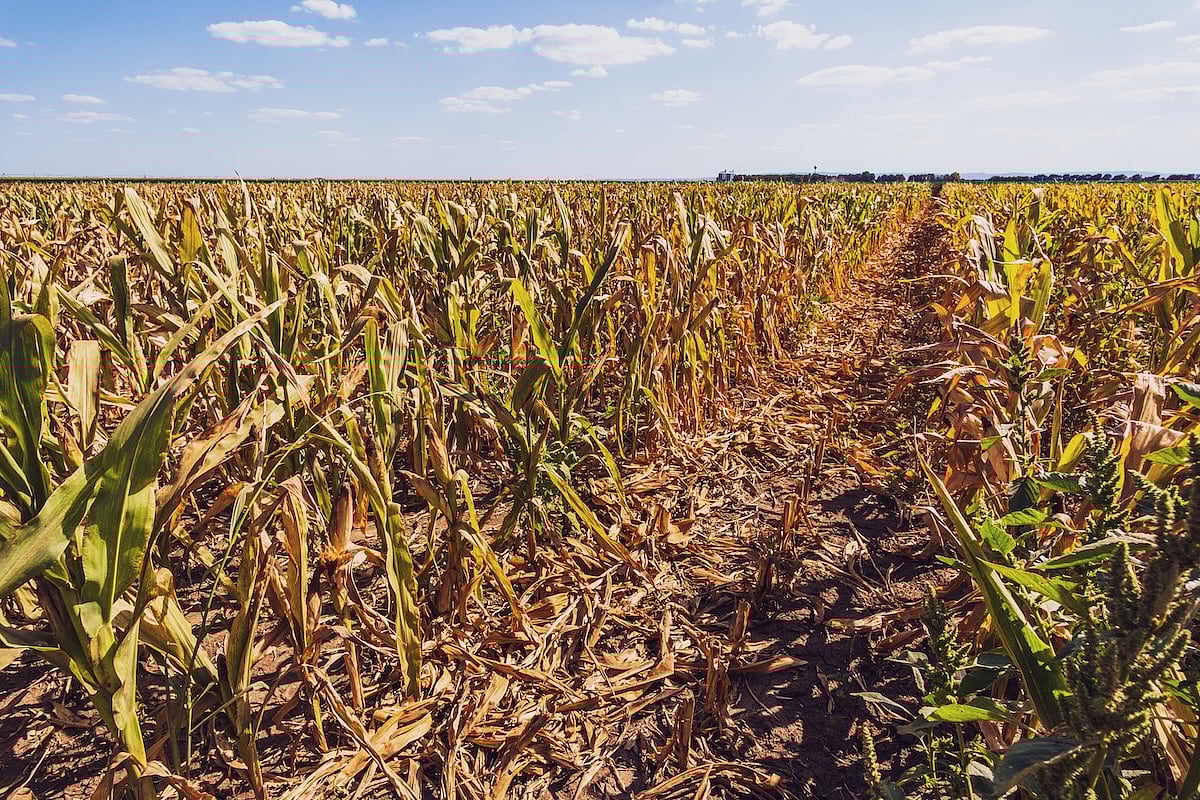 via HealthDay
WEDNESDAY, April 8, 2026 — Extreme heat waves combined with bone-dry droughts will occur five times more often by century’s end under current climate policies, a new study says.
These dangerous heat wave/drought combos are already more common and will continue to increase as climate change affects the globe, researchers reported April 7 in the journal Geophysical Research Letters.
“Heat and drought amplify each other,” increasing the risk of wildfires, lost crops and heat-related deaths, lead researcher Di Cai, a climate scientist at the Ocean University of China, said in a news release.
“In compound hot-dry extremes, they lead to water restrictions and unstable food prices,” Cai said. “For outdoor workers, it is dangerous.”
For the new study, researchers analyzed 152 different simulations based on eight climate models. They defined hot-dry events as days with a temperature in the top 10% and at least moderate drought.
There were roughly four hot-dry events a year between 2001 and 2020, twice as many as during the pre-industrial period from 1850 to 1900.
These extreme hot-dry events could occur up to 10 times a year on average by the century’s end, with some lasting up to 15 days, researchers projected.
By then, the risk of hot-dry days at any given time will be more than five times what it was between 1961 and 1990, researchers said.
This risk will mainly affect more than a quarter (28%) of the global population, or nearly 2.6 billion people, researchers projected.
“When you get to almost 30% of the global population affected by this, it’s very critical,” senior researcher Monica Ionita, a climatologist at the Alfred Wegener Institute in Germany, said in a news release.
"It should make us consider much, much more deeply our actions in the future," she added.
By comparison, less than 7% of the global population is expected to face that level of heat wave/drought risk in the 2030s, the study said.
People living in low-income tropical nations that contribute a small fraction of humanity’s greenhouse gas emissions are likely to see the greatest impact.
“For lower-income countries, there is a huge unfairness here,” Cai said. “It’s hard to fund air conditioning. It’s hard to fund health care. There is no backup if water runs out. It’s not just a climate science issue; it is about basic, daily life.”
Ionita said she had anticipated a slightly slower pace of change, ending at a figure of maybe 10% or 15% by the year 2100.
“By the end or middle of the century, maybe my children will not be able to experience the life that I have now,” Ionita said.
Limiting emissions could avert a lot of this risk, researchers found.
If all nations fully implement the climate action plans they contributed under the Paris Agreement – and take more binding long-term pledges – about 18% of the global population would face increased risk of hot-dry extremes by the end of the century.
That’s still a lot of people – 1.7 billion – but nearly a third fewer than would be affected under the current trajectory, researchers said.
“The choices we make today will directly affect the daily lives of billions of people in the future,” Cai said.
Sources
Disclaimer: Statistical data in medical articles provide general trends and do not pertain to individuals. Individual factors can vary greatly. Always seek personalized medical advice for individual healthcare decisions.
Source: HealthDay
Posted : 2026-04-09 02:11
Read more

- Novartis Cosentyx Receives FDA Approval for Pediatric Patients Aged 12+ with Moderate to Severe Hidradenitis Suppurativa
- Cognitive, Linguistic Deficits in Kindergarten Linked to Dyslexia Risk
- Bristol Myers Squibb Presents Positive Results from Phase 3 SCOUT-HCM Trial Demonstrating Efficacy and Safety of Camzyos (mavacamten) in Adolescents with Symptomatic Obstructive Hypertrophic Cardiomyopathy
- Biogen Presents Additional Salanersen Data Showing New Motor Milestones Achieved in Children with SMA Previously Treated with Gene Therapy
- FDA Approves Ponlimsi (denosumab-adet), a Biosimilar to Prolia
- ACC: Hypertensive Heart Disease Mortality Increasing in Young Women
Disclaimer
Every effort has been made to ensure that the information provided by Drugslib.com is accurate, up-to-date, and complete, but no guarantee is made to that effect. Drug information contained herein may be time sensitive. Drugslib.com information has been compiled for use by healthcare practitioners and consumers in the United States and therefore Drugslib.com does not warrant that uses outside of the United States are appropriate, unless specifically indicated otherwise. Drugslib.com's drug information does not endorse drugs, diagnose patients or recommend therapy. Drugslib.com's drug information is an informational resource designed to assist licensed healthcare practitioners in caring for their patients and/or to serve consumers viewing this service as a supplement to, and not a substitute for, the expertise, skill, knowledge and judgment of healthcare practitioners.
The absence of a warning for a given drug or drug combination in no way should be construed to indicate that the drug or drug combination is safe, effective or appropriate for any given patient. Drugslib.com does not assume any responsibility for any aspect of healthcare administered with the aid of information Drugslib.com provides. The information contained herein is not intended to cover all possible uses, directions, precautions, warnings, drug interactions, allergic reactions, or adverse effects. If you have questions about the drugs you are taking, check with your doctor, nurse or pharmacist.
Popular Keywords
- metformin obat apa
- alahan panjang
- glimepiride obat apa
- takikardia adalah
- erau ernie
- pradiabetes
- besar88
- atrofi adalah
- kutu anjing
- trakeostomi
- mayzent pi
- enbrel auto injector not working
- enbrel interactions
- lenvima life expectancy
- leqvio pi
- what is lenvima
- lenvima pi
- empagliflozin-linagliptin
- encourage foundation for enbrel
- qulipta drug interactions