
Electrodes Partially Restore Movement, Sensation In Spinal Cord Patients

 via HealthDay
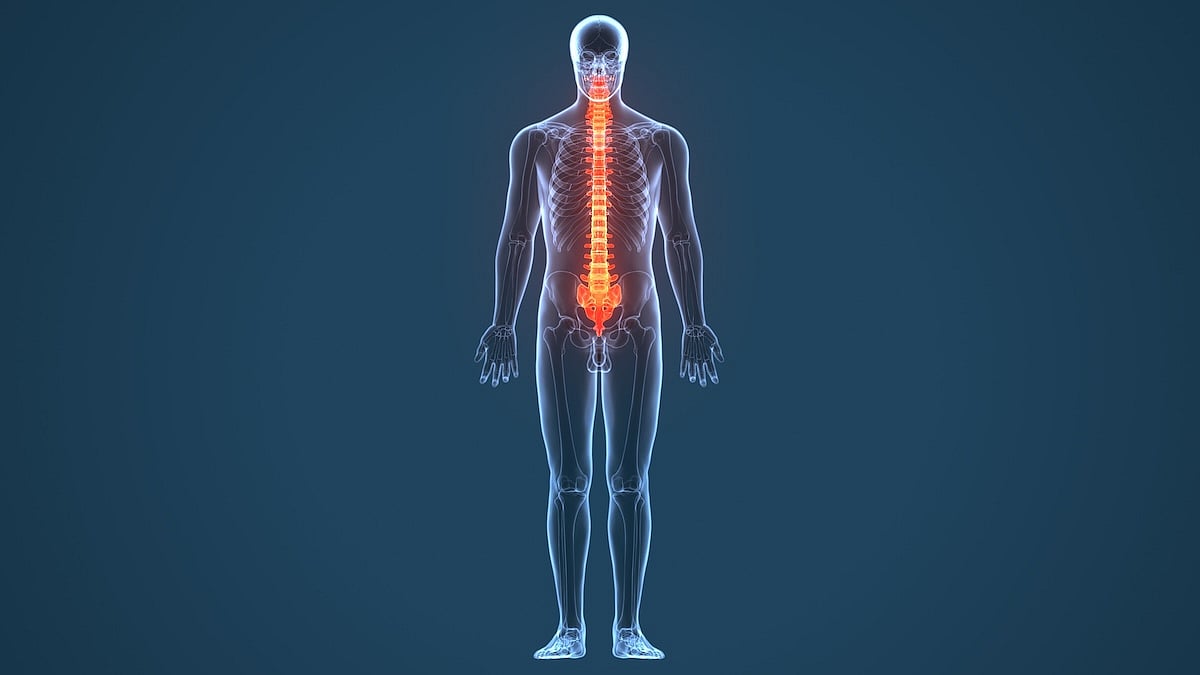
THURSDAY, March 12, 2026 — People lose two main things in a spinal cord injury: The ability to control the movement of their limbs, as well as the ability to receive sensory feedback from them.
This two-way communication is crucial for a person to be able to move their legs or arms properly.
Now, a team of researchers reports in the journal Nature Biomedical Engineering that it’s close to bridging this gap created by a spinal cord injury.
Electrical stimulation delivered both above and below the site of a spinal cord injury can simulate the experience of sensory feedback from a limb in motion, researchers said.
The feedback isn’t exact — people experience it as sensations that seem to occur in other parts of their bodies.
“[I] could tell when [my foot] hit based on feedback up to here [pointing to chest],” one participant told researchers. “It wasn't like I could feel my foot hit the treadmill or anything like that, but it was close.”
But the results highlight a path forward in restoring mobility among spinal cord patients, said senior researcher David Bornton, an associate professor of engineering at Brown University in Providence, Rhode Island.
“This is the first time that simultaneous motor stimulation and sensory feedback have been demonstrated in people with complete spinal cord injuries,” Bornton said in a news release.
“This is an important step toward the goal of fully bridging the gap created by a spinal lesion,” he added. “By providing both motor activation and simultaneous sensory feedback, we are making progress toward restoring coordinated movements and functional independence.”
In the study, researchers implanted electrodes above and below the site of spinal cord damage in three patients who’d lost the use of their legs following complete spinal cord injuries.
Results showed that stimulation below the injury partially restored muscle control of the legs, while stimulation above the site enabled patients to “feel” where their legs were located in space as they walked.
“By simultaneously restoring motor activation and meaningful sensory feedback, we’re moving beyond isolated function toward coordinated, purposeful movement,” said researcher Dr. Jared Fridley, chief of spinal neurosurgery at the University of Texas at Austin.
“That’s a critical step if neurotechnology is going to translate into real-world independence for people living with severe spinal cord injury,” Fridley said in a news release.
After the electrodes were implanted, researchers worked with the patients to fine-tune stimulation of the nerves responsible for muscle movements while walking.
The patients themselves used a “DJ board” equipped with knobs and sliders to direct different levels of stimulation to different parts of the spinal cord, zeroing in on patterns that caused leg muscles to contract and flex.
“Participants told us that using the DJ board was actually a lot of fun,” lead researcher Jonathan Calvert said in a news release. He’s an assistant professor of neurological surgery at the University of California-Davis.
“We gave them target leg positions and poses and they navigated the board until they found the correct stimulation patterns to achieve that pose,” Calvert said. “They really enjoyed being able to see their legs move again and having their own control through the interface.”
Researchers then used the data from the DJ board to train an artificial intelligence that optimized those stimulation patterns, finding the most precise ways to cause muscle activity for each patient.
“The space of possible stimulations is huge — far too large to be efficiently searched by trial and error,” said Lakshmi Narasimhan Govindarajan, a postdoctoral researcher at Massachusetts Institute of Technology in Cambridge, Massachusetts.
“Machine learning provides an opportunity to more efficiently search and personalize stimulation patterns so they more precisely matched the muscle activity we were aiming for in each participant,” Govindarajan said in a news release.
The team then used a similar process above the injury site to produce sensory feedback.
Given the spinal cord injury, they couldn’t map the stimulation above directly to sensations from the legs or feet below.
Instead, they tested whether sensations linked to other parts of the body could be used to replace sensations from a person’s lower extremities.
“We used a sensory replacement approach where specific sensations are associated with specific actions or stimuli to enable participants to reinterpret sensory cues,” Calvert said. “In this case, participants might feel a sensation in their chest or arm or back, but they can learn to associate those sensations with different joint angles in their legs.”
Using this feedback, patients while blindfolded could still accurately report the angle of their legs, researchers found.
“That tells us that these sensations are providing sensory feedback that’s useful in terms of knowing where their legs are in space at any point in time,” Calvert explained. “The participants indicated that this type of sensory feedback could be very useful in their daily life such as transferring in and out of their wheelchair.”
Researchers then conducted an experiment using both types of electrical stimulation. Patients supported by a ceiling-mounted harness performed walking movements on a treadmill.
Results showed that participants could engage the muscles needed for walking and accurately report when their feet struck the ground — even though the sensation registered in another part of their body.
This sort of feedback might help future patients in rehab for spinal cord injuries, researchers said.
“There’s reason to believe that coordinated stimulation across an injury site could produce positive rehabilitation effects,” Borton said. “That’s not something we were able to fully explore in this study, but that we plan to pursue in future work.”
The team next plans to recruit more patients for a longer-term study testing this stimulation approach outside the hospital.
“We are excited by the potential of neurotechnology to supplement the long history of pharmaceutical-based approaches to helping people with spinal cord injury,” Borton said.
Sources
Disclaimer: Statistical data in medical articles provide general trends and do not pertain to individuals. Individual factors can vary greatly. Always seek personalized medical advice for individual healthcare decisions.
Source: HealthDay
Posted : 2026-03-13 01:48
Read more

- Doctors Warn Patients to Research Cosmetic Surgery Providers Before Getting Work Done
- Ipsen Voluntarily Withdraws Tazverik (tazemetostat) in Follicular Lymphoma and Epithelioid Sarcoma
- Microsoft Unveils AI Health Tool That Can Read Your Medical Records
- Both Types Of Diabetes Increase Dementia Risk
- FDA Vaccine Chief Dr. Vinay Prasad Exiting Role
- Up to 155,000 COVID Deaths May Not Have Been Counted, Study Finds
Disclaimer
Every effort has been made to ensure that the information provided by Drugslib.com is accurate, up-to-date, and complete, but no guarantee is made to that effect. Drug information contained herein may be time sensitive. Drugslib.com information has been compiled for use by healthcare practitioners and consumers in the United States and therefore Drugslib.com does not warrant that uses outside of the United States are appropriate, unless specifically indicated otherwise. Drugslib.com's drug information does not endorse drugs, diagnose patients or recommend therapy. Drugslib.com's drug information is an informational resource designed to assist licensed healthcare practitioners in caring for their patients and/or to serve consumers viewing this service as a supplement to, and not a substitute for, the expertise, skill, knowledge and judgment of healthcare practitioners.
The absence of a warning for a given drug or drug combination in no way should be construed to indicate that the drug or drug combination is safe, effective or appropriate for any given patient. Drugslib.com does not assume any responsibility for any aspect of healthcare administered with the aid of information Drugslib.com provides. The information contained herein is not intended to cover all possible uses, directions, precautions, warnings, drug interactions, allergic reactions, or adverse effects. If you have questions about the drugs you are taking, check with your doctor, nurse or pharmacist.
Popular Keywords
- metformin obat apa
- alahan panjang
- glimepiride obat apa
- takikardia adalah
- erau ernie
- pradiabetes
- besar88
- atrofi adalah
- kutu anjing
- trakeostomi
- mayzent pi
- enbrel auto injector not working
- enbrel interactions
- lenvima life expectancy
- leqvio pi
- what is lenvima
- lenvima pi
- empagliflozin-linagliptin
- encourage foundation for enbrel
- qulipta drug interactions