
FDA Approves Higher-Dose Wegovy To Help People Lose More Weight
 via HealthDay
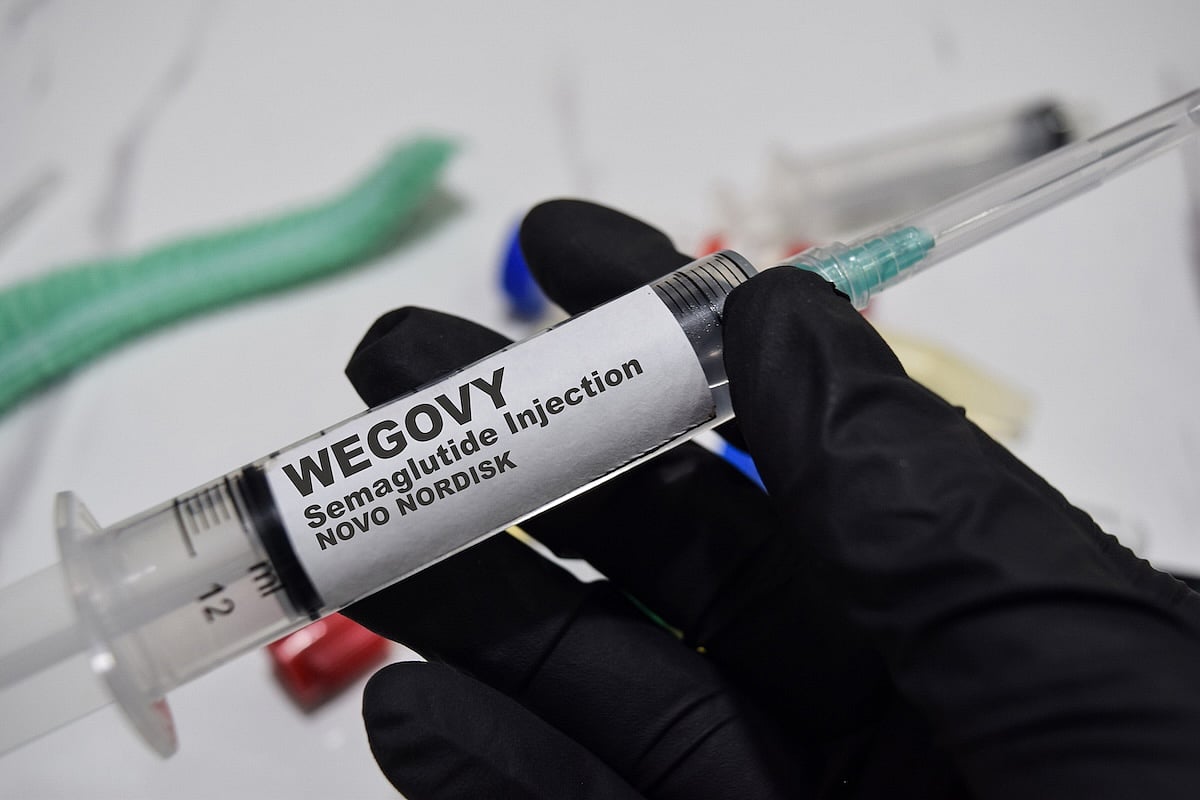
MONDAY, March 23, 2026 — A stronger version of the popular weight loss drug Wegovy is on the way after federal regulators signed off on a higher dose.
The U.S. Food and Drug Administration (FDA) approved a 7.2-milligram dose of Novo Nordisk’s semaglutide, the active ingredient in Wegovy. Until now, the highest approved dose was 2.4 milligrams, taken as a weekly shot.
The new version, called Wegovy HD, went through an accelerated review and was approved just 54 days after the application was accepted, the agency said.
Novo Nordisk said the higher-dose shot is expected to be available in the U.S. in April, when the price is to be announced.
The higher dose was tested in a study that tracked people for nearly 17 months.
Participants who took the stronger dose lost about 19% of their body weight, or about 47 pounds on average. People taking the lower dose lost about 16% (or roughly 39 pounds).
Researchers said that the higher dose may help people who don’t see enough results with the 2.4-milligram version.
And while the current dose works for many, The Associated Press reported, “some individuals do not reach their therapeutic goals,” according to findings published earlier in the journal The Lancet Diabetes & Endocrinology.
Like other weight loss drugs, the higher the dose, the more a person is likely to deal with side effects.
More than 70% of people taking the higher Wegovy dose reported issues such as nausea, vomiting or constipation. This compares to over 60% with the lower dose and around 43% with a placebo.
Some people also reported unusual skin sensations, like burning or tingling. This happened in about 23% of people on the higher dose, compared to 6% on the lower dose and less than 1% on a placebo.
Serious side effects were reported in nearly 7% of people taking the higher dose, compared to about 11% on the lower dose and about 5% on a placebo.
Dr. Jody Dushay, an endocrinologist at Harvard Medical School, said the new option could be useful for some patients.
It "may be especially helpful for people" who tolerate the lower dose but "have had suboptimal weight loss," she said.
She added it could also help people who don’t respond well to other weight loss drugs.
But increasing the dose from 2.4 mg to 7.2 mg is "quite a big jump," Dushay said, especially without an intermediate dose in between.
“It will be important to see if in the real world, versus in a clinical study, side effects are any worse,” she said.
Sources
Disclaimer: Statistical data in medical articles provide general trends and do not pertain to individuals. Individual factors can vary greatly. Always seek personalized medical advice for individual healthcare decisions.
Source: HealthDay
Posted : 2026-03-24 01:49
Read more

- Parental Death From Drug Overdose, Homicide, Suicide Increases Childhood Mortality Risk
- EBC: Polyurethane-Coated Implants for Breast Reconstruction Tied to Lower Complication Risk
- Cardiovascular Health Tied to Fracture Risk in Postmenopausal Women
- Recommendations Presented for Management of Hepatic Encephalopathy
- Risk for Dementia May Be Increased by Severe Infections
- Worsening of Financial Well-Being Tied to Accelerated Cognitive Aging
Disclaimer
Every effort has been made to ensure that the information provided by Drugslib.com is accurate, up-to-date, and complete, but no guarantee is made to that effect. Drug information contained herein may be time sensitive. Drugslib.com information has been compiled for use by healthcare practitioners and consumers in the United States and therefore Drugslib.com does not warrant that uses outside of the United States are appropriate, unless specifically indicated otherwise. Drugslib.com's drug information does not endorse drugs, diagnose patients or recommend therapy. Drugslib.com's drug information is an informational resource designed to assist licensed healthcare practitioners in caring for their patients and/or to serve consumers viewing this service as a supplement to, and not a substitute for, the expertise, skill, knowledge and judgment of healthcare practitioners.
The absence of a warning for a given drug or drug combination in no way should be construed to indicate that the drug or drug combination is safe, effective or appropriate for any given patient. Drugslib.com does not assume any responsibility for any aspect of healthcare administered with the aid of information Drugslib.com provides. The information contained herein is not intended to cover all possible uses, directions, precautions, warnings, drug interactions, allergic reactions, or adverse effects. If you have questions about the drugs you are taking, check with your doctor, nurse or pharmacist.
Popular Keywords
- metformin obat apa
- alahan panjang
- glimepiride obat apa
- takikardia adalah
- erau ernie
- pradiabetes
- besar88
- atrofi adalah
- kutu anjing
- trakeostomi
- mayzent pi
- enbrel auto injector not working
- enbrel interactions
- lenvima life expectancy
- leqvio pi
- what is lenvima
- lenvima pi
- empagliflozin-linagliptin
- encourage foundation for enbrel
- qulipta drug interactions