
Most Americans Say They Don’t Trust Driverless Cars — Here’s Why

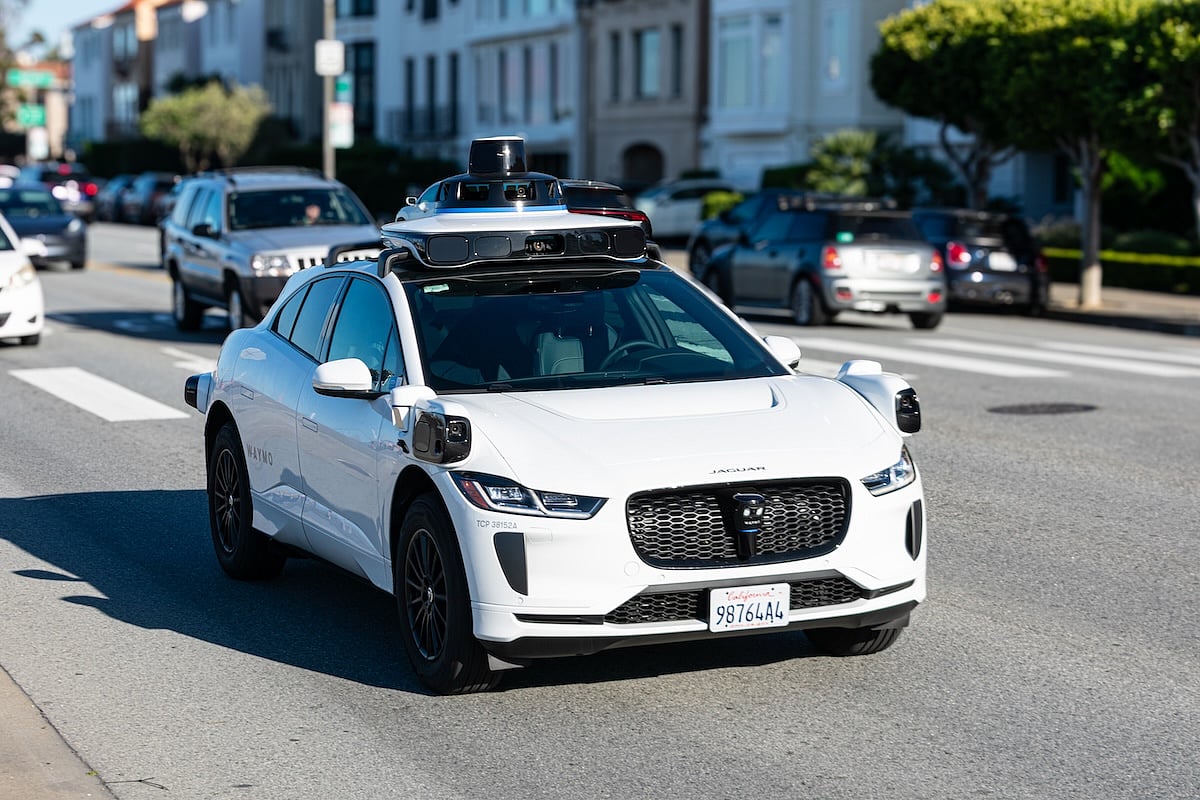 via HealthDay
SUNDAY, March 8, 2026 — Many Americans remain uneasy about driverless cars. According to new research, their concerns go far beyond safety.
A new study from the University of California San Diego found that most Americans worry the technology could lead to job losses, with many saying it could worsen income inequality.
Waymo "robotaxis" are already in service in a number of U.S. cities, including San Francisco, Los Angeles, Phoenix, Austin, Dallas, Houston, San Antonio, Miami, Orlando, and Atlanta.
The survey was conducted in late 2021 and included 4,631 adults across the United States who took part in the Pew Research Center’s American Trends Panel.
At that time, more than 60% of respondents said they would probably or definitely avoid riding in a driverless car. Most (85%) said widespread use of automated vehicles (AVs) would likely lead to job losses for people who work in ride-hailing, ridesharing and delivery services.
What's more, nearly 46% said the technology would widen the gap between higher- and lower-income Americans, while only about 6% said it could narrow that gap, the researchers found.
“Driverless cars are often framed as an engineering challenge, but it’s also a profound sociotechnical transition,” Behram Wali, lead author of the study and assistant professor in the Department of Urban Studies and Planning at the UC San Diego School of Social Sciences, said in a news release.
“This study develops a new behavioral framework to reveal a critical tension: how Americans willingness to embrace driverless cars is directly tied to their fears of job loss and income inequality," Wali said. "These findings show many Americans are evaluating automated vehicles as a broader social and economic change — not just whether the technology works, but who benefits and who bears the costs."
The study also found differences in how people view driverless cars.
People with higher incomes, more education and greater familiarity with automated vehicles were generally more open to riding in them.
But even these groups often expressed concern about how the technology could affect jobs and income inequality.
Meanwhile, lower-income participants and folks living in rural areas were less likely to say they would ride in a driverless vehicle and were more skeptical about its economic impact.
Researchers say these differences highlight a broader divide in how Americans see these types of emerging technologies.
Driverless cars rely on artificial intelligence to interpret complex road conditions and make swift driving decisions.
But the study suggests that public trust in the technology depends on more than just technical performance.
Concerns about job losses and economic fairness may shape whether people accept AVs.
“While conventional strategies such as increasing awareness and tech-savviness are helpful and necessary to boost AV acceptance, this study shows that such strategies alone cannot address the fundamental employment and economic concerns,” Wali said.
“We cannot afford a laissez-faire approach to AV regulation. Policymakers must ensure that underrepresented groups are not left behind."
Sources
Disclaimer: Statistical data in medical articles provide general trends and do not pertain to individuals. Individual factors can vary greatly. Always seek personalized medical advice for individual healthcare decisions.
Source: HealthDay
Posted : 2026-03-09 01:28
Read more

- FDA Approves Novo Nordisk's Sogroya as the First and Only Once-Weekly, Long-Acting Growth Hormone for Three Additional Pediatric Indications
- Family Caregivers Provide $1 Trillion In Annual Labor, AARP Says
- Direct-Acting Antiviral Prescribing for Hep C Peaked in 2015, Then Declined
- Survey Shows More People Struggling To Afford ACA Insurance
- Fitness Trackers Might Help Predict Multiple Sclerosis Progression
- Sex, Menopausal Status Tied to Severity of Early Lyme Disease Presentation
Disclaimer
Every effort has been made to ensure that the information provided by Drugslib.com is accurate, up-to-date, and complete, but no guarantee is made to that effect. Drug information contained herein may be time sensitive. Drugslib.com information has been compiled for use by healthcare practitioners and consumers in the United States and therefore Drugslib.com does not warrant that uses outside of the United States are appropriate, unless specifically indicated otherwise. Drugslib.com's drug information does not endorse drugs, diagnose patients or recommend therapy. Drugslib.com's drug information is an informational resource designed to assist licensed healthcare practitioners in caring for their patients and/or to serve consumers viewing this service as a supplement to, and not a substitute for, the expertise, skill, knowledge and judgment of healthcare practitioners.
The absence of a warning for a given drug or drug combination in no way should be construed to indicate that the drug or drug combination is safe, effective or appropriate for any given patient. Drugslib.com does not assume any responsibility for any aspect of healthcare administered with the aid of information Drugslib.com provides. The information contained herein is not intended to cover all possible uses, directions, precautions, warnings, drug interactions, allergic reactions, or adverse effects. If you have questions about the drugs you are taking, check with your doctor, nurse or pharmacist.
Popular Keywords
- metformin obat apa
- alahan panjang
- glimepiride obat apa
- takikardia adalah
- erau ernie
- pradiabetes
- besar88
- atrofi adalah
- kutu anjing
- trakeostomi
- mayzent pi
- enbrel auto injector not working
- enbrel interactions
- lenvima life expectancy
- leqvio pi
- what is lenvima
- lenvima pi
- empagliflozin-linagliptin
- encourage foundation for enbrel
- qulipta drug interactions