
Pediatric Allergy Specialist: Feed Babies Allergenic Foods Earlier, Not Later

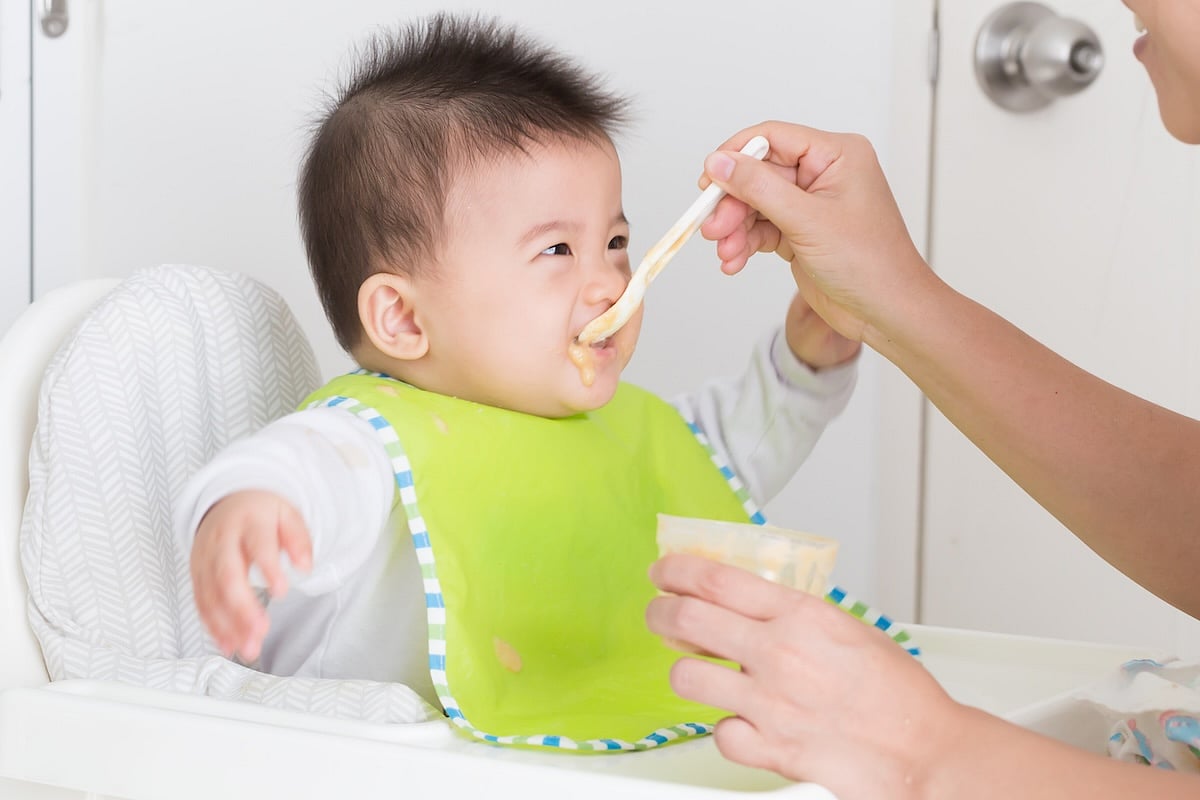 via HealthDay
THURSDAY, March 12, 2026 — In January 2026, the U.S. Department of Agriculture released new Dietary Guidelines for Americans, 2025-2030.
Its main message is to promote diets that include whole foods high in protein and full-fat dairy while minimizing ultra-processed foods. As a pediatric allergist/immunologist, I am pleased to see the inclusion of food allergy prevention advice for infants.
Unfortunately, this information is buried deep within the document, outdated and lacks important rationale and details that are discussed below.
On page 5 of 8 within the new guidelines, there is a section titled “Special Populations & Considerations” with a subheading “Infancy & Early Childhood (Birth-4 Years).” Along with a discussion of the benefits of breast feeding, this section suggests introducing solid foods at 6 months of age.
The authors incorrectly classify babies with egg allergy as "high risk," whereas severe eczema is the highest risk factor for developing food allergy.
In addition, parents should be advised to introduce allergenic foods such as peanut, egg, milk, tree nuts and seafood to all infants, beginning around 4 to 6 months of age. This has proven to be safe and highly effective in reducing the development of food allergy.
The story of flip-flopping infant feeding guidelines and the rise in food allergies has received a lot of attention in recent years.
In 2000, the American Academy of Pediatrics advised parents to avoid giving dairy to infants until 1 year of age, no eggs until age 2, and no peanuts, tree nuts or seafood until age 3.
This was based upon then-current expert opinion. It made sense, based on the knowledge at the time, to recommend avoidance to protect infants. Unfortunately, this advice was wrong.
Over the next 20 years, new evidence evolved to support an opposite approach. The landmark LEAP trial published in 2015 was the first study to show a dramatic reduction in peanut allergy by feeding peanuts early and keeping them in the diet. Current guidelines and dozens of additional studies all support this as well.
In 2017, added guidelines recommended testing for peanut allergy prior to introduction for babies who have severe eczema and/or egg allergy. It turns out, this advice was also wrong. It’s no wonder parents are frustrated with these changing recommendations.
But that is how science works — new approaches should replace older advice based upon new evidence. Science is never “done.” We rarely have final answers to anything. Science evolves and improves our understanding, which is a benefit for all of us.
Since 2017, there have been dozens of additional studies and new guidelines have evaluated the timing of introduction for common allergens including milk, egg, peanut, tree nuts, soy, wheat, sesame and seafood.
Here are the four main messages for parents and pediatricians for preventing food allergies:
Unfortunately, the new dietary guidelines lack context for why the timing of introduction or frequent inclusion in the diet is important.
Despite being recommended for almost a decade, current food allergy prevention guidelines are still not being fully implemented by pediatricians or parents, although recent trends in peanut allergy suggest decreasing rates since the 2017 guidelines were published.
Allergists have been promoting food allergy prevention for almost a decade, and it is refreshing to see some of this information included in the USDA’s new dietary guidelines.
However, many parents remain scared to feed peanuts to their infants. Feeding babies has turned into a medical procedure, but it doesn’t have to be that way.
If you would like to learn more, the American College of Allergy, Asthma & Immunology has patient education and a search tool to find board-certified allergists in your area.
About the expert
Dr. Stukus is a professor of clinical pediatrics and the director of the Food Allergy Treatment Center at Nationwide Children's Hospital in Columbus, Ohio. Dr. Stukus is the current president-elect for the American College of Allergy, Asthma and Immunology. In addition, he is an associate editor for Annals of Allergy, Asthma and Immunology and previously served as an elected member of the executive committee for the section on allergy and immunology within the American Academy of Pediatrics. Dr. Stukus has authored over 120 peer-reviewed articles, 2 books (just finished writing his 3rd) and a dozen book chapters. He is active on social media as @AllergyKidsDoc where he combats misinformation.
Disclaimer: Statistical data in medical articles provide general trends and do not pertain to individuals. Individual factors can vary greatly. Always seek personalized medical advice for individual healthcare decisions.
Source: HealthDay
Posted : 2026-03-13 01:48
Read more

- FDA Approves Icotyde for Moderate-to-Severe Plaque Psoriasis
- Previous COVID-19 Tied to Increased Risk for Kidney Disease
- Norovirus Sickens Close to 200 People on Caribbean Cruise
- Interventions to Improve Heart Health Do Not Provide Cognitive Benefits
- EBC: Polyurethane-Coated Implants for Breast Reconstruction Tied to Lower Complication Risk
- 'Early Bird' Exercisers Get The Most Health Benefits, Study Finds
Disclaimer
Every effort has been made to ensure that the information provided by Drugslib.com is accurate, up-to-date, and complete, but no guarantee is made to that effect. Drug information contained herein may be time sensitive. Drugslib.com information has been compiled for use by healthcare practitioners and consumers in the United States and therefore Drugslib.com does not warrant that uses outside of the United States are appropriate, unless specifically indicated otherwise. Drugslib.com's drug information does not endorse drugs, diagnose patients or recommend therapy. Drugslib.com's drug information is an informational resource designed to assist licensed healthcare practitioners in caring for their patients and/or to serve consumers viewing this service as a supplement to, and not a substitute for, the expertise, skill, knowledge and judgment of healthcare practitioners.
The absence of a warning for a given drug or drug combination in no way should be construed to indicate that the drug or drug combination is safe, effective or appropriate for any given patient. Drugslib.com does not assume any responsibility for any aspect of healthcare administered with the aid of information Drugslib.com provides. The information contained herein is not intended to cover all possible uses, directions, precautions, warnings, drug interactions, allergic reactions, or adverse effects. If you have questions about the drugs you are taking, check with your doctor, nurse or pharmacist.
Popular Keywords
- metformin obat apa
- alahan panjang
- glimepiride obat apa
- takikardia adalah
- erau ernie
- pradiabetes
- besar88
- atrofi adalah
- kutu anjing
- trakeostomi
- mayzent pi
- enbrel auto injector not working
- enbrel interactions
- lenvima life expectancy
- leqvio pi
- what is lenvima
- lenvima pi
- empagliflozin-linagliptin
- encourage foundation for enbrel
- qulipta drug interactions