
Scientists' Push For a Universal Vaccine Takes a Key Step Forward
 via HealthDay
WEDNESDAY, Feb. 25, 2026 — If you avoid getting vaccinated because you dread one needle stick after another, there’s hopeful news from scientists at five major U.S. universities.
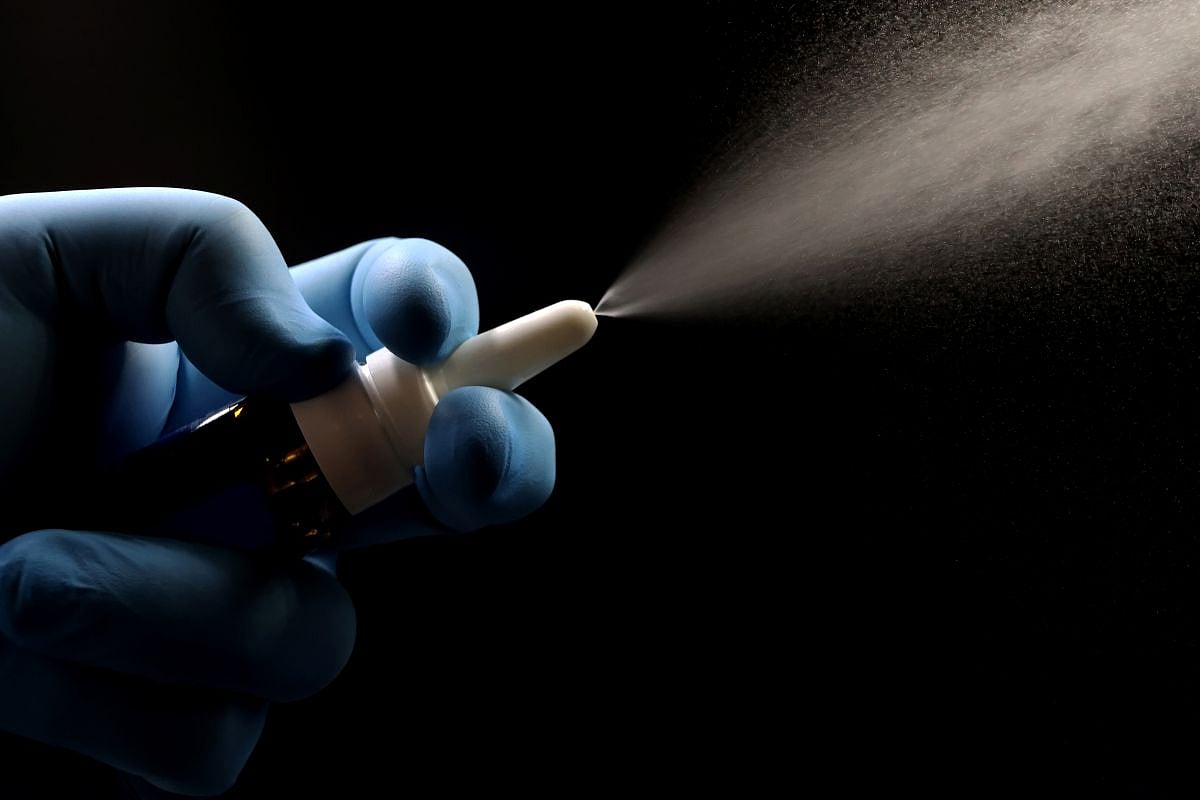
They’ve taken a major step toward developing a nasal spray that could one day protect against everything from influenza and COVID-19 to bacterial pneumonia and even common allergens.
"That would transform medical practice," said Bali Pulendran, a professor of microbiology and immunology at Stanford University School of Medicine who was part of a team that recently tested just such a vaccine in mice.
They published their findings Feb. 19 in the journal Science.
Their experimental nasal vaccine is designed to supercharge the lungs’ own immune defenses, and tests in mice found it provided protection that lasted for months.
"We were interested in this idea because it sounded a bit outrageous," Pulendran said in a news release. "I think nobody was seriously entertaining that something like this could ever be possible."
But indeed, it was.
The spray protected mice from SARS-CoV-2 and other coronaviruses, as well as two pathogens that cause common hospital-acquired infections and even against house mites, a common allergen, researchers reported.
Just don’t prepare to stop rolling up your sleeve anytime soon. The vaccine spray still has to be tested in people — and animal studies often yield different results in humans.
But if researchers can achieve similar results in people, one vaccine, administered via nose, could someday replace multiple yearly shots for respiratory illnesses. It could also provide quick protection against an emerging pandemic virus, researchers said.
The experimental vaccine works differently from immunizations that have been available for the last 230 years.
Today’s shots provide the immune system with a piece of a disease-causing germ, so it can recognize and fight a real virus if needed. The problem: Many viruses mutate quickly. That’s why boosters and annual flu shots are recommended.
"Like the proverbial leopard that changes its spots, a virus can change the antigens on its surface," Pulendran explained.
The new vaccine works in a different way.
It imitates the signals exchanged by immune cells during an infection, thereby marshaling the body’s main defenses into a coordinated, longer-lasting response, the researchers explained in a Stanford Medicine news release.
They have given their new formulation a distinctive monicker: GLA-3M-052-LS+OVA.
It’s designed to mimic signals that stimulate innate immune cells in the lungs. It also includes an egg protein known as ovalbumin or OVA. It draws T cells into the lungs and helps sustain the immune response for weeks to months.
Mice got the vaccine through droplets placed in their snouts. Some had several doses, each a week apart. Then they were exposed to a respiratory virus.
What happened next was striking, researchers said.
Three doses of the experimental vaccine provided at least three months’ protection against SARS-CoV-2 and other coronaviruses.
The lungs of vaccinated mice had little virus. All survived. Meanwhile, their unvaccinated counterparts, had severe weight loss — a sign they were sick — and often died.
"The lung immune system is so ready and so alert that it can launch the typical adaptive responses — virus-specific T cells and antibodies — in as little as three days, which is an extraordinarily short length of time," Pulendran said. "Normally, in an unvaccinated mouse, it takes two weeks."
The vaccine also provided about three months of protection against some bacterial infections, including Staphylococcus aureus and Acinetobacter baumannii. Vaccinated mice also had a strong immune response to a protein from dust mites that causes allergic asthma.
"I think what we have is a universal vaccine against diverse respiratory threats," Pulendran said.
If tests in people pan out, he projects that a universal respiratory vaccine could be available within five to seven years.
"Imagine getting a nasal spray in the fall months that protects you from all respiratory viruses including COVID-19, influenza, respiratory syncytial virus (RSV) and the common cold, as well as bacterial pneumonia and early spring allergens," Pulendran said.
Besides Stanford, the study was carried out by researchers from Emory University, the University of North Carolina at Chapel Hill, Utah State University and the University of Arizona.
Sources
Disclaimer: Statistical data in medical articles provide general trends and do not pertain to individuals. Individual factors can vary greatly. Always seek personalized medical advice for individual healthcare decisions.
Source: HealthDay



Posted : 2026-02-26 02:01
Read more

- Dentists Can Help Detect Undiagnosed Diabetes, Study Argues
- Genentech’s Fenebrutinib Is the First Investigational Medicine in Over a Decade That Reduces Disability Progression in Primary Progressive Multiple Sclerosis (PPMS)
- EAU: Patient Satisfaction Improved With Virtual Reality to Explain Shock Wave Lithotripsy
- Overweight, Obesity Remained Highly Prevalent in U.S. Youths in 2024
- Reduction in Acetaminophen Orders in ED After White House Briefing
- Beren Therapeutics Announces FDA Acceptance of its New Drug Application for Adrabetadex in Infantile-Onset Niemann Pick Disease Type C
Disclaimer
Every effort has been made to ensure that the information provided by Drugslib.com is accurate, up-to-date, and complete, but no guarantee is made to that effect. Drug information contained herein may be time sensitive. Drugslib.com information has been compiled for use by healthcare practitioners and consumers in the United States and therefore Drugslib.com does not warrant that uses outside of the United States are appropriate, unless specifically indicated otherwise. Drugslib.com's drug information does not endorse drugs, diagnose patients or recommend therapy. Drugslib.com's drug information is an informational resource designed to assist licensed healthcare practitioners in caring for their patients and/or to serve consumers viewing this service as a supplement to, and not a substitute for, the expertise, skill, knowledge and judgment of healthcare practitioners.
The absence of a warning for a given drug or drug combination in no way should be construed to indicate that the drug or drug combination is safe, effective or appropriate for any given patient. Drugslib.com does not assume any responsibility for any aspect of healthcare administered with the aid of information Drugslib.com provides. The information contained herein is not intended to cover all possible uses, directions, precautions, warnings, drug interactions, allergic reactions, or adverse effects. If you have questions about the drugs you are taking, check with your doctor, nurse or pharmacist.
Popular Keywords
- metformin obat apa
- alahan panjang
- glimepiride obat apa
- takikardia adalah
- erau ernie
- pradiabetes
- besar88
- atrofi adalah
- kutu anjing
- trakeostomi
- mayzent pi
- enbrel auto injector not working
- enbrel interactions
- lenvima life expectancy
- leqvio pi
- what is lenvima
- lenvima pi
- empagliflozin-linagliptin
- encourage foundation for enbrel
- qulipta drug interactions