
Some Patients Keep Weight off With Fewer GLP-1 Injections, Study Finds

 via HealthDay
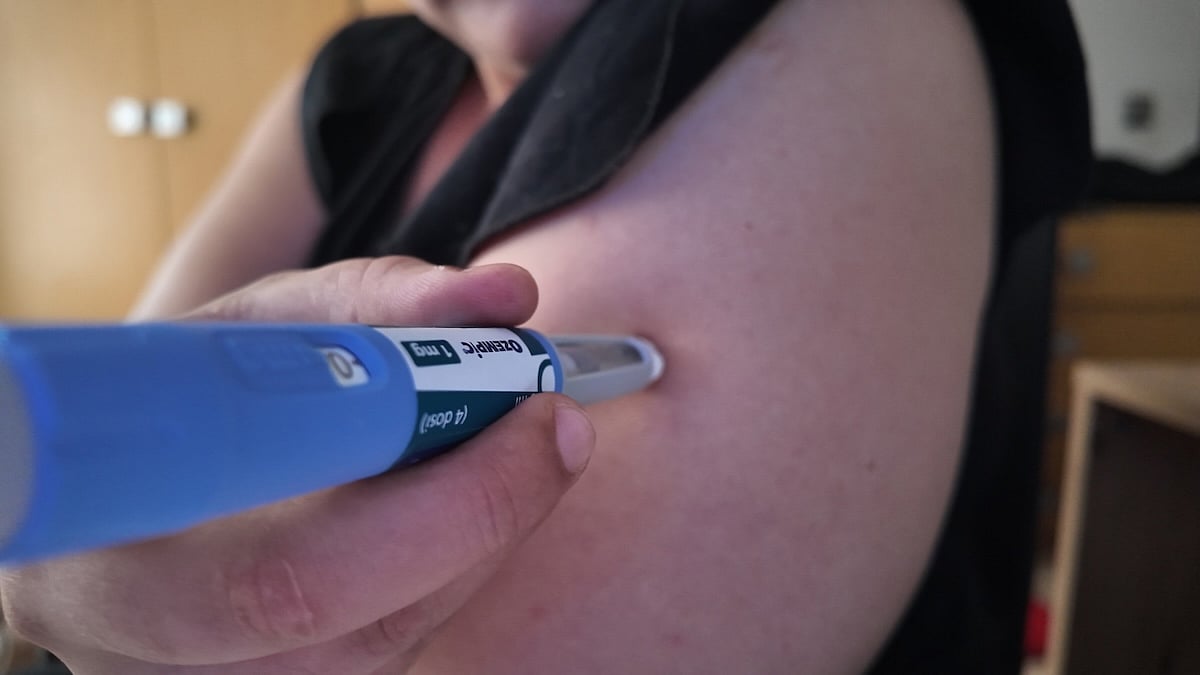
FRIDAY, March 6, 2026 — Some patients taking popular GLP-1 weight loss drugs may be able to keep the weight off while taking injections less often, according to a small new study.
The idea began when Dr. Mitch Biermann, an obesity and internal medicine specialist at Scripps Clinic in San Diego, started noticing a pattern among his patients.
Several told him they had begun spacing out their injections instead of taking them every week, and they were still able to maintain their weight loss.
“By the time the third person told me they were taking it every second or third week and still maintaining their weight, I started recommending it to other patients,” Biermann told The New York Times.
Curious whether the approach could work more broadly, Biermann reviewed medical charts from patients who had tried stretching out their dosing schedule.
The small study, published recently in the journal Obesity, looked at 34 patients who had already lost weight on GLP-1 medications. After they began taking injections less often, most continued to maintain their weight and health improvements.
After 36 weeks of follow-up, the results were encouraging:
Only four patients gained weight after spacing out their injections, and this group eventually returned to once-every-week shots.
On average, participants had already reduced their body mass index (BMI) from 30, which is the level considered obese, to 25.2, which falls in the overweight range.
By the end of the study, the average BMI had dropped further to 24.6, which is considered a normal weight.
Patients in the study used several different schedules:
While on these schedules, most either continued to lose small amounts of weight or maintained their weight. Only five people gained back a small amount.
One participant, Scott McMillin, 65, had struggled with his weight for years.
After starting weekly Wegovy injections in late 2023, he lost 20 pounds and brought his blood pressure and cholesterol back into healthy ranges.
However, when McMillin tried stopping the medication completely, he quickly regained 10 pounds.
So, he restarted weekly injections and later tried spacing them out to once every two weeks.
“It made no difference for me whether I was taking injections every week or every two weeks, and I just thought, well, less is better,” McMillin told The Times.
He now exercises regularly on the elliptical and follows a routine of two meals a day with no snacks in between.
It's important to note that the study was small and the patients were mostly white and privately insured, meaning the results may not apply to everyone.
The research also looked at existing medical records and had no control group, so it was not the "gold standard" randomized clinical trial.
Experts also stressed that patients did not stop the medication entirely. They simply took it less often and only after they had already reached their weight loss goals.
Dr. Fatima Stanford, an obesity specialist at Harvard Medical School, told the Times that "individuals who agree to reduce treatment frequency may already be more adherent, more confident in their behaviors or metabolically more responsive."
About 12% of patients who tried spacing out injections eventually went back to weekly doses after gaining weight back.
Still, Stanford said the study does "reframe the conversation."
"Chronic treatment does not necessarily mean maximal weekly dosing forever.” More individualized dosing plans may be more effective, she added.
GLP-1 drugs such as Wegovy and Ozempic have transformed obesity treatment.
But many people worry about the idea of lifelong weekly injections, especially because the medications can be expensive and insurance coverage varies.
Only about 6% of Americans report using GLP-1 drugs, even though roughly 51% of U.S. adults meet the eligibility criteria.
“The number one question patients give me about this drug is, ‘Will I have to take this every week forever?’” Biermann said.
Sources
Disclaimer: Statistical data in medical articles provide general trends and do not pertain to individuals. Individual factors can vary greatly. Always seek personalized medical advice for individual healthcare decisions.
Source: HealthDay
Posted : 2026-03-07 01:38
Read more

- HelloFresh Pizza Recall Issued in 10 States Over Metal Risk
- Scientists' Push For a Universal Vaccine Takes a Key Step Forward
- FDA Provides Fast Track Designation to Nipocalimab for Systemic Lupus Erythematosus
- ACC/AHA Guidelines Updated for Dyslipidemia Management
- EAU: Patient Satisfaction Improved With Virtual Reality to Explain Shock Wave Lithotripsy
- Diltiazem Linked to Increased Risk for Bleeding Complications in A-Fib
Disclaimer
Every effort has been made to ensure that the information provided by Drugslib.com is accurate, up-to-date, and complete, but no guarantee is made to that effect. Drug information contained herein may be time sensitive. Drugslib.com information has been compiled for use by healthcare practitioners and consumers in the United States and therefore Drugslib.com does not warrant that uses outside of the United States are appropriate, unless specifically indicated otherwise. Drugslib.com's drug information does not endorse drugs, diagnose patients or recommend therapy. Drugslib.com's drug information is an informational resource designed to assist licensed healthcare practitioners in caring for their patients and/or to serve consumers viewing this service as a supplement to, and not a substitute for, the expertise, skill, knowledge and judgment of healthcare practitioners.
The absence of a warning for a given drug or drug combination in no way should be construed to indicate that the drug or drug combination is safe, effective or appropriate for any given patient. Drugslib.com does not assume any responsibility for any aspect of healthcare administered with the aid of information Drugslib.com provides. The information contained herein is not intended to cover all possible uses, directions, precautions, warnings, drug interactions, allergic reactions, or adverse effects. If you have questions about the drugs you are taking, check with your doctor, nurse or pharmacist.
Popular Keywords
- metformin obat apa
- alahan panjang
- glimepiride obat apa
- takikardia adalah
- erau ernie
- pradiabetes
- besar88
- atrofi adalah
- kutu anjing
- trakeostomi
- mayzent pi
- enbrel auto injector not working
- enbrel interactions
- lenvima life expectancy
- leqvio pi
- what is lenvima
- lenvima pi
- empagliflozin-linagliptin
- encourage foundation for enbrel
- qulipta drug interactions