
Ticks Can Creepy-Crawl Your House For Weeks Before Dying, Study Shows
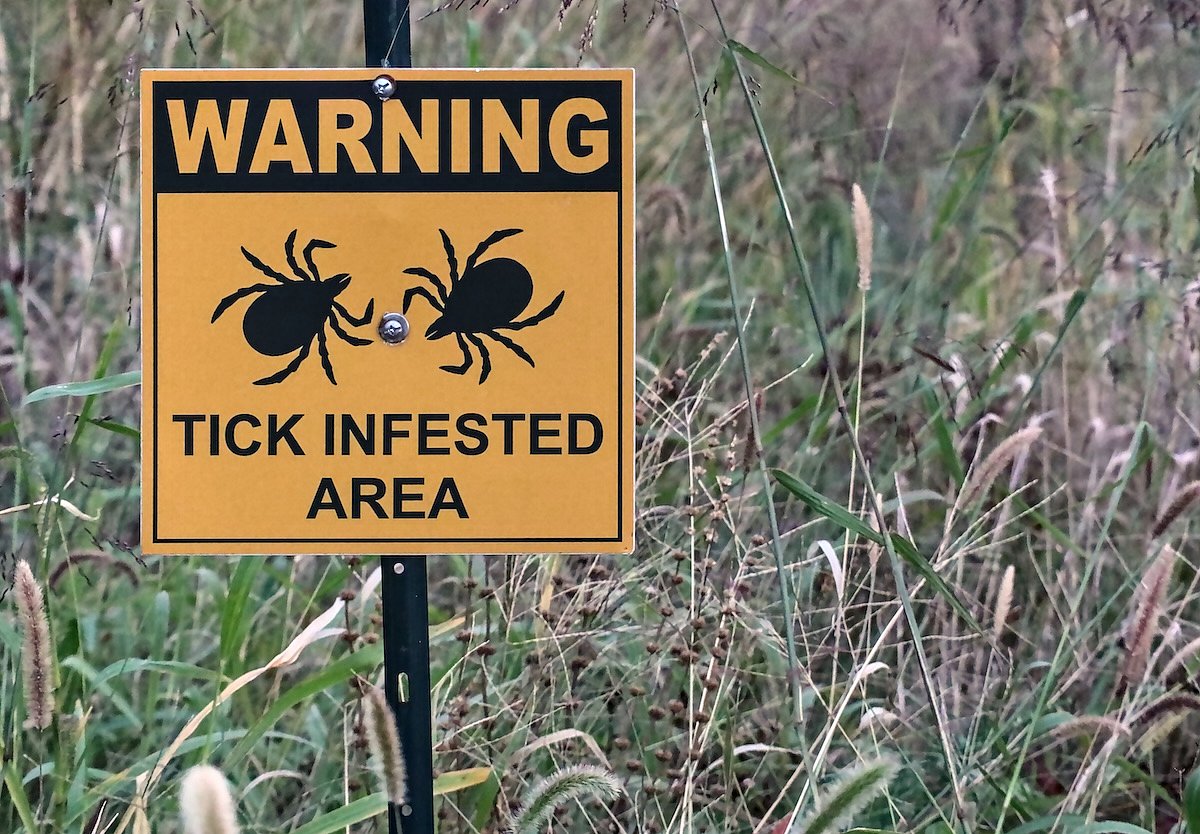 via HealthDay
TUESDAY, May 19, 2026 — Here’s a creepy-crawling fact as summer fun approaches – ticks can survive indoors for up to three weeks on hard-surface or carpeted floors, according to a study.
This means folks can have a tick latch onto them despite taking proper precautions outdoors, if one of the pests hitchhikes into their home on a person or a pet, researchers reported recently in the Journal of Vector Ecology.
“Ticks can pose a risk even in the places you least expect, such as your house,” lead researcher Afsoon Sabet said in a news release. She’s a doctoral student in entomology at Ohio State University in Columbus.
Cases of tick-borne diseases in the U.S. increased 40% between 2019 and 2022, according to the U.S. Centers for Disease Control and Prevention, researchers said in background notes.
For the study, researchers tested survival times for 90 lone star and 90 Gulf Coast ticks, two types that can transmit germs that make people and animals sick.
Experiments involved five types of flooring – tile, wood, vinyl, short-pile carpet and shag-like carpet. The ticks were individually covered with a cup so they couldn’t escape, and their survival was compared to that of others kept in a growth chamber.
Average overall survival time was about 18 days for Gulf Coast ticks and 11 days for lone star ticks, the study found.
The longest survival time for Gulf Coast ticks was an average of 25 days on vinyl flooring and the shortest 10 days on shag-like carpeting, researchers found.
Lone star ticks survived longest on shag-like carpeting, an average 15 days, and shortest seven days on tile flooring.
Comparatively, some of the control ticks kept at ideal temperatures and humidity levels survived for more than a year, researchers said.
The research team speculated that the ticks probably died from loss of moisture.
“The tick life cycle is usually at least two years, typically. And the longevity of that tick is based on its ability to maintain moisture,” said senior researcher Risa Pesapane, an associate professor of veterinary preventive medicine at Ohio State.
“This shows that ticks are not going to die immediately,” even in a moisture-parched home, Pesapane said in a news release.
“Pinpointing exactly how long a tick might survive in a home is really difficult because people’s homes are going to vary in their environmental conditions," she said. "But for the first time, this study puts some guardrails on that estimate, and it shows us that ticks can survive for at least a week.”
These results show the importance of protective measures like using tick prevention products on people and pets and, once inside, thoroughly checking animals for ticks and either immediately bagging clothes or putting them in a dryer, researchers said.
“The ultimate goal from a public health perspective is to reinforce that ticks brought into the home on pets or people could be a risk, and hopefully having some data around that will compel people to say, ‘OK, doing tick checks is really important,’ ” Pesapane said.
“That way you’re not releasing ticks into your home environment where you’re relaxed and comfortable, and most definitely not thinking about tick prevention,” she added.
Sources
Disclaimer: Statistical data in medical articles provide general trends and do not pertain to individuals. Individual factors can vary greatly. Always seek personalized medical advice for individual healthcare decisions.
Source: HealthDay
Posted : 2026-05-20 02:48
Read more

Disclaimer
Every effort has been made to ensure that the information provided by Drugslib.com is accurate, up-to-date, and complete, but no guarantee is made to that effect. Drug information contained herein may be time sensitive. Drugslib.com information has been compiled for use by healthcare practitioners and consumers in the United States and therefore Drugslib.com does not warrant that uses outside of the United States are appropriate, unless specifically indicated otherwise. Drugslib.com's drug information does not endorse drugs, diagnose patients or recommend therapy. Drugslib.com's drug information is an informational resource designed to assist licensed healthcare practitioners in caring for their patients and/or to serve consumers viewing this service as a supplement to, and not a substitute for, the expertise, skill, knowledge and judgment of healthcare practitioners.
The absence of a warning for a given drug or drug combination in no way should be construed to indicate that the drug or drug combination is safe, effective or appropriate for any given patient. Drugslib.com does not assume any responsibility for any aspect of healthcare administered with the aid of information Drugslib.com provides. The information contained herein is not intended to cover all possible uses, directions, precautions, warnings, drug interactions, allergic reactions, or adverse effects. If you have questions about the drugs you are taking, check with your doctor, nurse or pharmacist.
Popular Keywords
- metformin obat apa
- alahan panjang
- glimepiride obat apa
- takikardia adalah
- erau ernie
- pradiabetes
- besar88
- atrofi adalah
- kutu anjing
- trakeostomi
- mayzent pi
- enbrel auto injector not working
- enbrel interactions
- lenvima life expectancy
- leqvio pi
- what is lenvima
- lenvima pi
- empagliflozin-linagliptin
- encourage foundation for enbrel
- qulipta drug interactions