
Ultrafine Wildfire Smoke Particles May Pose Serious Health Risks
Medically reviewed by Drugs.com
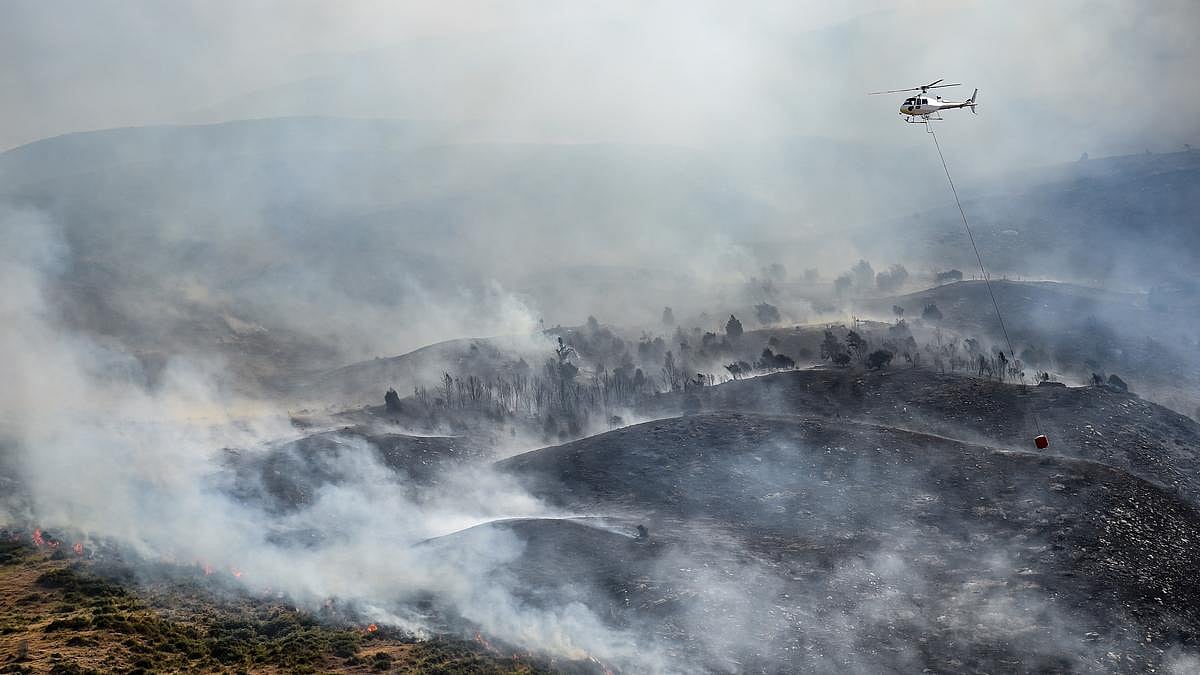 via HealthDay
WEDNESDAY, May 27, 2026 — Wildfire smoke carries a wide array of potentially toxic particles, in sizes so small they could prove a threat to human health, a new study says.
Smoke samples taken during the Los Angeles wildfires of 2025 contained high levels of toxic metals, polycyclic aromatic compounds, volatile organic compounds and PFAS “forever chemicals,” researchers are reporting in the July issue of the Journal of Hazardous Materials.
Many of these compounds are known to be toxic, causing cancer and contributing to other health problems.
“In a wildland-urban interface fire, you are not only burning trees. You are burning cars, batteries, wiring, metals, plastics and building materials,” said lead researcher José Guillermo Cedeño Laurent, an assistant professor at Rutgers School of Public Health in New Brunswick, New Jersey.
Cedeño Laurent was in Los Angeles in January 2025 for an environmental health and air quality symposium when wildfires tore through that region.
He worked with colleagues to collect air and ash samples at a Pasadena home a little more than two miles southwest of one of the wildfires, between Jan. 16 and 22.
The team then analyzed the samples, trying to break down the chemicals contained in the soot and ash.
Typically, environmental health experts and regulators look at air pollution particles that are less than 2.5 microns in diameter. By comparison, a human hair is 50 to 70 microns wide, according to the Arctic Monitoring and Assessment Program.
But these researchers examined ultrafine particles that were smaller than 100 nanometers – and one micron is equal to 1,000 nanometers.
These ultrafine particles accounted for 40% of the total mass of the samples, researchers found.
Airborne toxic metals were 30 times Los Angeles’ normal levels and up to 1,000 times greater than smoke from wildfires that burn solely trees and vegetation.
Polycyclic aromatic hydrocarbons (PAH) were roughly 10 times higher than normal levels. These included benzene, toluene, ethylbenzene and xylenes that were 4.8 to 13 times higher than urban background levels.
PAH chemicals have been linked to cancer, asthma and damage to the immune and reproductive systems, according to Oregon State University.
The samples also showed PFAS and other chemicals blended into particles from burned vegetation, researchers said.
“I do not want the message to be simply scary,” Cedeño Laurent said in a news release. “The point is that if we want to understand the risks, we need to know the composition of the particles, not just the amount.”
Worse, these contaminated particles pose a double risk, researchers said – first when they are airborne, and again when they are disturbed during cleanup. Efforts to pick up the pieces following a devastating wildfire might wind up spreading toxins into the air, soil, water or indoors.
“These fires leave a chemical legacy,” Cedeño Laurent said. “To protect communities, we need monitoring and cleanup strategies that reflect what burned, not just how much smoke was measured.”
Sources
Disclaimer: Statistical data in medical articles provide general trends and do not pertain to individuals. Individual factors can vary greatly. Always seek personalized medical advice for individual healthcare decisions.
Source: HealthDay
Posted : 2026-05-27 22:29
Read more

Disclaimer
Every effort has been made to ensure that the information provided by Drugslib.com is accurate, up-to-date, and complete, but no guarantee is made to that effect. Drug information contained herein may be time sensitive. Drugslib.com information has been compiled for use by healthcare practitioners and consumers in the United States and therefore Drugslib.com does not warrant that uses outside of the United States are appropriate, unless specifically indicated otherwise. Drugslib.com's drug information does not endorse drugs, diagnose patients or recommend therapy. Drugslib.com's drug information is an informational resource designed to assist licensed healthcare practitioners in caring for their patients and/or to serve consumers viewing this service as a supplement to, and not a substitute for, the expertise, skill, knowledge and judgment of healthcare practitioners.
The absence of a warning for a given drug or drug combination in no way should be construed to indicate that the drug or drug combination is safe, effective or appropriate for any given patient. Drugslib.com does not assume any responsibility for any aspect of healthcare administered with the aid of information Drugslib.com provides. The information contained herein is not intended to cover all possible uses, directions, precautions, warnings, drug interactions, allergic reactions, or adverse effects. If you have questions about the drugs you are taking, check with your doctor, nurse or pharmacist.
Popular Keywords
- metformin obat apa
- alahan panjang
- glimepiride obat apa
- takikardia adalah
- erau ernie
- pradiabetes
- besar88
- atrofi adalah
- kutu anjing
- trakeostomi
- mayzent pi
- enbrel auto injector not working
- enbrel interactions
- lenvima life expectancy
- leqvio pi
- what is lenvima
- lenvima pi
- empagliflozin-linagliptin
- encourage foundation for enbrel
- qulipta drug interactions