
'Universal Donor' Blood Supplies Dangerously Low, Study Warns

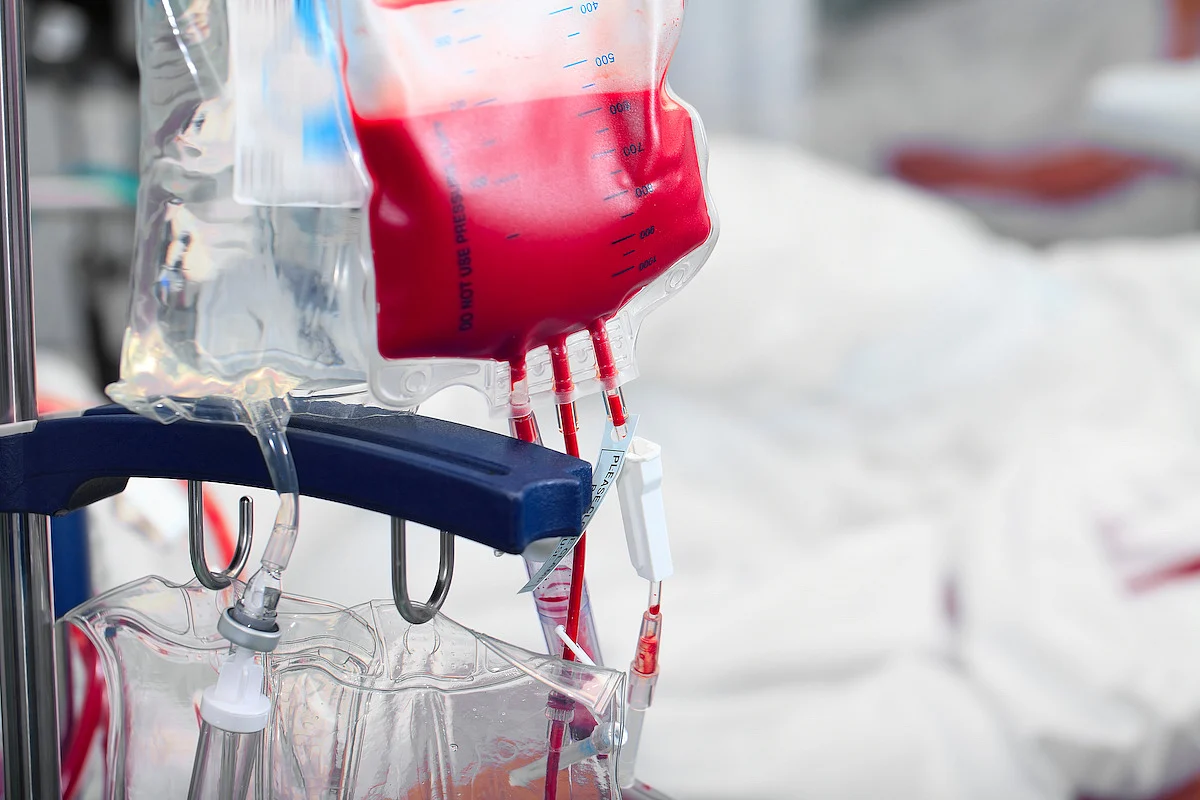 via HealthDay
WEDNESDAY, March 25, 2026 — Blood banks are reporting dangerously low supplies of “universal donor” O-negative blood, a new study warns.
O-negative blood can be given to patients of any blood type, making it essential in medical emergencies where a person’s blood type is unknown, researchers said.
But O-negative supplies have dropped to critically low levels every year since 2019, researchers reported in the journal Anesthesiology Open.
Shortages have led the American Red Cross to offer Amazon gift cards to anyone who donates blood through the end of March, researchers noted.
"O-negative blood is critical when patients need immediate transfusions before their blood type can be confirmed, such as during trauma care or other life-threatening emergencies," lead researcher Dr. Brent Lee said in a news release. Lee is director of clinical excellence and performance improvement with North American Partners in Anesthesia.
The problem is that demand for O-negative blood has grown while supply remains limited, researchers said.
About 13% of transfusions performed in 2023 involved O-negative blood, but only 7% of the entire U.S. population has O-negative blood, researchers reported.
Doctors are contributing to the problem by using O-negative blood in situations where other blood types could be used, the study found.
"Because anesthesiologists administer up to 60% of all blood transfusions in the United States, they play a key role in preserving and promoting responsible management of this scarce resource," Lee said.
The study argues that doctors should instead use O-positive blood, which is more readily available, for emergency transfusions in all male patients and for female patients who aren’t likely to become pregnant.
O-positive blood is called that because the blood cells are “positive” for the Rhesus factor D (RhD) antigen, which can trigger an immune response against the donated blood.
However, research has found that the risk of an immune response to an O-positive blood transfusion is “generally low” — around 3% to 6% of all cases — given that most people are RhD-positive, the study says.
The exception is women with childbearing potential, as an RhD mismatch could be harmful to babies in future pregnancies, researchers said.
Because of that, O-negative blood should be saved for these women, as well as for people with O-negative blood, the study said.
The report also calls for performing blood typing as quickly as possible in medical emergencies so that patients can be switched off O-negative blood as soon as possible.
"In collaboration with other specialties and national organizations, anesthesiologists play a key role in alleviating chronic blood shortages and preserving the availability of O-negative blood for those who need it most," Lee said. "It is imperative that we maximize the benefits of blood transfusion, while strengthening the security of the nation’s blood supply."
Sources
Disclaimer: Statistical data in medical articles provide general trends and do not pertain to individuals. Individual factors can vary greatly. Always seek personalized medical advice for individual healthcare decisions.
Source: HealthDay
Posted : 2026-03-26 01:51
Read more

- Johnson & Johnson Announces U.S. FDA Approval of Tecvayli plus Darzalex Faspro for Relapsed/Refractory Multiple Myeloma, Offering a Potential New Standard of Care as Early as Second Line
- Crash Course Might Speed Brain Stimulation Treatment For Depression, Study Suggests
- New Lyme Disease Vaccine Shows Strong Results in Trial
- ACC/AHA Guidelines Updated for Dyslipidemia Management
- FDA Accepts New Drug Application for Genentech’s Giredestrant in ESR1-Mutated, ER-Positive Advanced Breast Cancer
- Early Study Results from Johnson & Johnson Show Promising Antitumor Activity with Combination of Pasritamig and Docetaxel in Advanced Prostate Cancer
Disclaimer
Every effort has been made to ensure that the information provided by Drugslib.com is accurate, up-to-date, and complete, but no guarantee is made to that effect. Drug information contained herein may be time sensitive. Drugslib.com information has been compiled for use by healthcare practitioners and consumers in the United States and therefore Drugslib.com does not warrant that uses outside of the United States are appropriate, unless specifically indicated otherwise. Drugslib.com's drug information does not endorse drugs, diagnose patients or recommend therapy. Drugslib.com's drug information is an informational resource designed to assist licensed healthcare practitioners in caring for their patients and/or to serve consumers viewing this service as a supplement to, and not a substitute for, the expertise, skill, knowledge and judgment of healthcare practitioners.
The absence of a warning for a given drug or drug combination in no way should be construed to indicate that the drug or drug combination is safe, effective or appropriate for any given patient. Drugslib.com does not assume any responsibility for any aspect of healthcare administered with the aid of information Drugslib.com provides. The information contained herein is not intended to cover all possible uses, directions, precautions, warnings, drug interactions, allergic reactions, or adverse effects. If you have questions about the drugs you are taking, check with your doctor, nurse or pharmacist.
Popular Keywords
- metformin obat apa
- alahan panjang
- glimepiride obat apa
- takikardia adalah
- erau ernie
- pradiabetes
- besar88
- atrofi adalah
- kutu anjing
- trakeostomi
- mayzent pi
- enbrel auto injector not working
- enbrel interactions
- lenvima life expectancy
- leqvio pi
- what is lenvima
- lenvima pi
- empagliflozin-linagliptin
- encourage foundation for enbrel
- qulipta drug interactions