
Visceral Adipose Tissue Increases Stress Urinary Incontinence Symptoms in Women
 via HealthDay
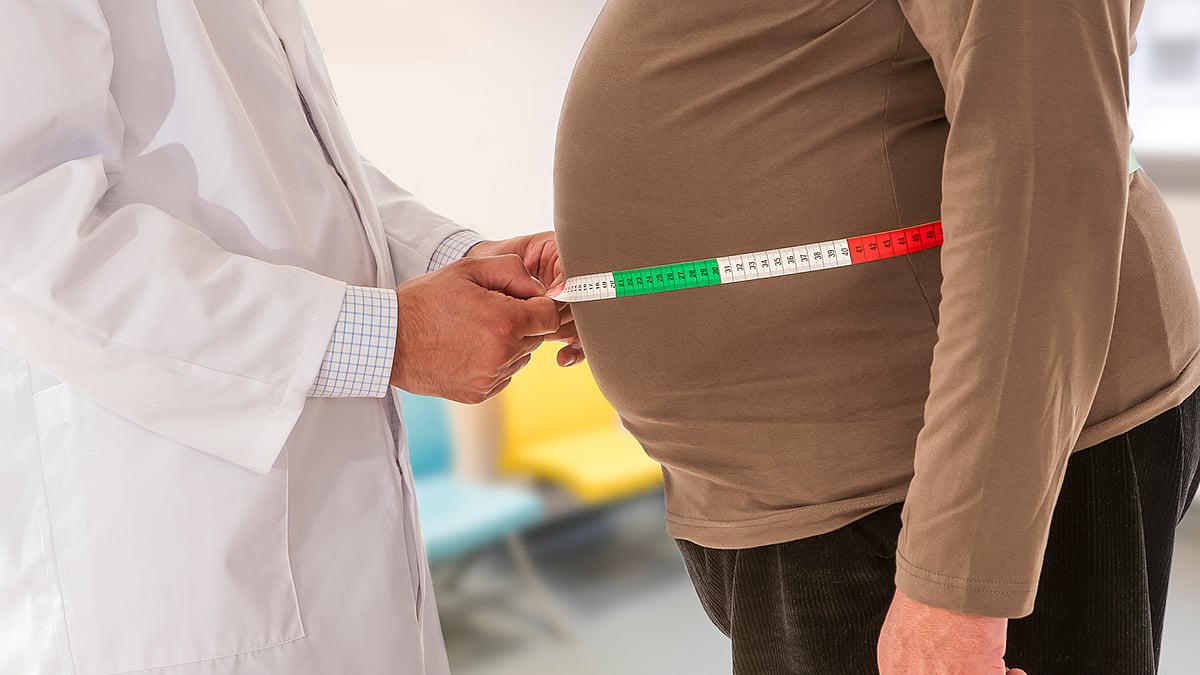
TUESDAY, April 21, 2026 -- Abdominal fat is linked to a higher risk for stress urinary incontinence (SUI) in women, according to a study published in the March issue of the European Journal of Obstetrics & Gynecology and Reproductive Biology.
Ana Jéssica dos Santos Sousa, Ph.D., from the State University of Paraíba in Brazil, and colleagues examined the association between fat mass distribution and SUI symptoms, as well as the impact of SUI on daily activities. The analysis included 99 women (aged 18 to 49 years).
The researchers found that women with SUI showed significantly higher total, android, gynoid, and visceral adipose tissue (VAT) fat mass than women without urinary incontinence. Increases in all fat mass types were associated with higher odds of SUI (total: 0.4 percent; android: 4.4 percent; gynoid: 2.6 percent; and VAT: 31.4 percent). The likelihood of SUI was particularly influenced by VAT fat mass (odds ratio, 1.51). There were also associations between greater VAT accumulation and a 16 percent increase in discomfort related to SUI urinary symptoms and a 9.3 percent increase in the impact of SUI on daily activities.
"A plausible explanation is the anatomical location of visceral fat within the abdominal cavity, adjacent to internal organs, which can elevate intra-abdominal pressure and increase loading on pelvic floor muscle support structures," the authors write. "The present findings can inform clinical practice by emphasizing behavioral strategies that target body-composition modification -- particularly VAT reduction -- for both treatment and prevention of SUI."
Disclaimer: Statistical data in medical articles provide general trends and do not pertain to individuals. Individual factors can vary greatly. Always seek personalized medical advice for individual healthcare decisions.
Source: HealthDay
Posted : 2026-04-22 02:09
Read more

Disclaimer
Every effort has been made to ensure that the information provided by Drugslib.com is accurate, up-to-date, and complete, but no guarantee is made to that effect. Drug information contained herein may be time sensitive. Drugslib.com information has been compiled for use by healthcare practitioners and consumers in the United States and therefore Drugslib.com does not warrant that uses outside of the United States are appropriate, unless specifically indicated otherwise. Drugslib.com's drug information does not endorse drugs, diagnose patients or recommend therapy. Drugslib.com's drug information is an informational resource designed to assist licensed healthcare practitioners in caring for their patients and/or to serve consumers viewing this service as a supplement to, and not a substitute for, the expertise, skill, knowledge and judgment of healthcare practitioners.
The absence of a warning for a given drug or drug combination in no way should be construed to indicate that the drug or drug combination is safe, effective or appropriate for any given patient. Drugslib.com does not assume any responsibility for any aspect of healthcare administered with the aid of information Drugslib.com provides. The information contained herein is not intended to cover all possible uses, directions, precautions, warnings, drug interactions, allergic reactions, or adverse effects. If you have questions about the drugs you are taking, check with your doctor, nurse or pharmacist.
Popular Keywords
- metformin obat apa
- alahan panjang
- glimepiride obat apa
- takikardia adalah
- erau ernie
- pradiabetes
- besar88
- atrofi adalah
- kutu anjing
- trakeostomi
- mayzent pi
- enbrel auto injector not working
- enbrel interactions
- lenvima life expectancy
- leqvio pi
- what is lenvima
- lenvima pi
- empagliflozin-linagliptin
- encourage foundation for enbrel
- qulipta drug interactions